
By: Anna Giorgi

Updated: January 27, 2026

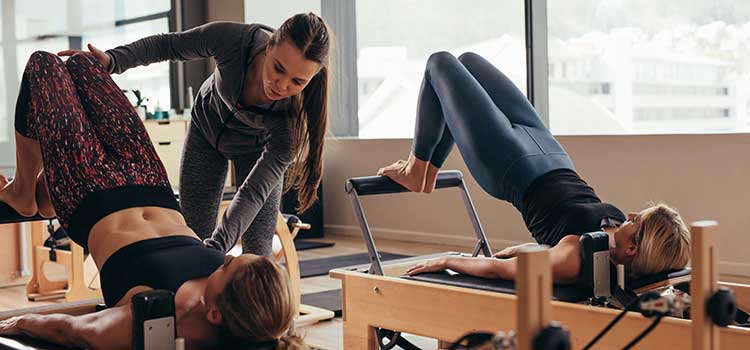
Do you crave a career that’s both physically and mentally stimulating? Pilates instruction might be your perfect fit! This dynamic field blends exercise science with mindful movement, empowering clients to improve their core strength, flexibility and overall well-being. This guide will illuminate the path to becoming a certified Pilates instructor and the fulfilling journey that awaits.
In This Article
A Pilates instructor is a fitness professional trained in the methodology of physical trainer Joseph Pilates. The method involves a system of exercises designed to improve physical strength, flexibility and posture. Pilates emphasizes core strength, proper alignment and controlled movements.
Pilates emphasizes core strength, proper alignment and controlled movements.
“Pilates instructors lead classes or individual sessions, guiding clients through a series of exercises using specialized equipment, such as Reformer, Cadillac, Chair, Barrels or on the Mat. They assess clients’ fitness levels, provide personalized instruction and ensure exercises are performed correctly and safely,” says Cloe Sommadossi, owner and founder of the Pilates Academy in Dubai (UAE) and member of the Pilates Method Alliance (PMA) Board of Directors.
Pilates instructors combine their knowledge of anatomy, biomechanics and posture analysis with a passion for supporting others in using Pilates to improve their well-being. “Being a Pilates instructor is not just about teaching exercises; it’s about enhancing wellness, improving lives and building community. It can truly be considered one of the most rewarding jobs in the world, offering the unique opportunity to positively impact others’ physical and mental health on a daily basis,” says Sommadossi.

Becoming a Pilates instructor involves completing specialized training at a recognized Pilates school. While a specific background isn’t required to begin training for this profession, many Pilates instructors come from related fields.
“Many successful instructors have prior experience in fitness, dance, sports or physical therapy. This background provides a preliminary understanding of body mechanics, movement and physical fitness, which can deepen their grasp of Pilates principles and techniques. A strong interest in health and wellness, along with a passion for helping others improve their physical condition, is also beneficial,” says Sommadossi.
Shaping the skills you need to succeed as a Pilates instructor involves the following concepts:
In-depth training programs equip you with a thorough understanding of Pilates principles, exercises and modifications for diverse bodies. In choosing your educational program, you will be able to choose from two styles within the discipline:
In choosing an educational program, it is also important to determine the type of instruction you want to pursue. Practical training typically begins with Mat Pilates, then expands to include instruction on specific Pilates apparatus such as the Reformer and other equipment. These programs may be taken separately or together in one comprehensive program:
“In the past, full certification encompassing all Pilates disciplines was required to be recognized as a certified instructor. However, many contemporary Pilates schools now offer partial certifications, allowing individuals to qualify as Matwork Trainers or Reformer Trainers. These partial certifications enable them to teach specific Pilates classes without needing the comprehensive certification,” says Sommadossi.
A solid foundation in anatomy and kinesiology ensures you guide clients safely and effectively, maximizing the benefits of each exercise. This knowledge also allows you to personalize movements for individual client needs and abilities. Quality Pilates education includes this curriculum in combination with instruction in the Pilates method.
“While a specific educational background isn’t mandatory, knowledge in areas such as anatomy, kinesiology or health education can significantly enhance an instructor’s effectiveness and their ability to cater to a wide range of client needs,” says Sommadossi.
Clear instructions, attentive observation and personalized adjustments are key to creating a safe and positive learning environment for your clients. Combining your Pilates expertise, knowledge of the human body and personal interest in helping others requires mastering the skills necessary to recognize the needs of others and offer productive support.
A great Pilates instructor excels in communication and observational skills. “Their attention to detail and patience help clients perform each movement safely and effectively, promoting a sense of achievement and continuous improvement,” says Sommadossi.
Most Pilates training programs provide a certificate to students who successfully complete a given curriculum. While this certificate is proof of your education, it does not qualify you as a “certified” Pilates instructor.
A certified Pilates instructor has earned professional certification, a credential awarded by a professional organization after meeting established requirements and passing a certification exam.
A certified Pilates instructor has earned professional certification, a credential awarded by a professional organization after meeting established requirements and passing a certification exam.
While certification is not necessary to work as a Pilates instructor, it is preferred by most employers. Pilates instruction is a self-regulated industry and is not overseen by state boards. State licensure is not required to work as a Pilates instructor. Professional certification is proof that you meet a specified set of professional criteria.
Your path to certification involves the following:
Numerous Pilates training organizations offer certification training programs. These programs provide the educational foundation you need to qualify for professional certification.
Seek programs accredited by recognized bodies like Pilates Method Alliance (PMA), an international membership association that promotes the Pilates industry. PMA offers International Teacher Training Accreditation for Pilates (ITTAP), an accreditation program for Pilates “train-the-trainer” programs in the areas of Mat, Reformer, and Comprehensive. ITTAP accreditation is designed to provide standards of excellence for worldwide Pilates teacher training programs. You can access a list of ITTAP approved programs on the PMA website.
Depending on the type of program you choose (Mat, Reformer or Comprehensive), ITTAP-accredited programs maintain standards regarding the total minimum number of training hours provided, which include:
In ITTAP-accredited programs, total hours include minimum hour requirements for each of the following components:
Many programs incorporate observation and practice teaching to hone your skills under-qualified instructors. ITTAP-approved teacher training programs must meet minimum hour requirements on these program components.
Observation allows you to have a mental picture of what exercises should look like when done in the correct form. It gives you a visual reference point that you can use to reproduce the movement in your own teaching. Practice teaching gives you experience in applying your knowledge and using it to motivate others. Through trial and error, practice teaching can help you gain the confidence necessary to engage others and lead them in reaching their fitness goals
A well-rounded Pilates teacher training program that combines both practical and theoretical instruction complemented by personal practice and teaching experience is key to providing safe, effective instruction tailored to individual needs, says Sommadossi. “Recently, there has been a noticeable dilution in the depth of Pilates education with the emergence of programs that last only a few days. These shorter courses offer a quick path to certification but often lack the comprehensive training essential for proficient instruction.”
Earning professional certification requires passing a written and practical exam to demonstrate your competency. It also allows you to pursue a wider range of professional opportunities.
“Pursuing professional certification in Pilates, as opposed to merely completing a certificate course, offers several significant advantages that enhance career prospects and the depth of expertise in the field,” says Sommadossi. “Professional certifications are often endorsed by established Pilates associations and recognized internationally, which lends greater credibility to an instructor’s qualifications and can attract a broader clientele.”
Other benefits to earning professional certification include career opportunities and advancement to more prestigious positions, higher earning potential and access to networking opportunities with others who hold the same certification, says Sommadossi.
The National Pilates Certification Program (NPCP) is a third-party certification organization accredited by the National Commission for Certifying Agencies (NCCA), the accrediting body of the Institute for Credentialing Excellence. The NPCP offers two national certification credentials:
Studio instruction involves leading small to large Pilates classes in fitness studios and catering to various fitness levels and client needs. Studio instruction can involve classical Pilates, contemporary Pilates or a wide range of specialty styles. “In the evolving landscape of Pilates instruction, certain specialties are gaining prominence and presenting exciting opportunities for prospective students,” says Sommadossi.
Some of these Pilates specialty areas include:
Fitness Pilates: focuses on integrating traditional Pilates techniques with modern fitness elements to create high-energy dynamic classes that appeal to those looking for both strength and cardiovascular benefits
Pre- and post-natal Pilates: uses Pilates to support women through pregnancy and postpartum recovery based on safely adjusting exercises to accommodate and benefit their changing bodies
Pilates for older adults: focuses on improving balance, flexibility, muscle strength and helping seniors maintain their independence and manage age-related changes
Sport-specific Pilates: uses Pilates as a cross-training tool to help athletes enhance their performance and reduce injury risk in specific sports
Rehabilitation Pilates: uses Pilates for rehabilitation from injuries, surgeries or chronic conditions
Children’s Pilates: introduces children to Pilates to help develop their body awareness, coordination and posture from an early age
Online and digital Pilates instruction: uses digital platforms to reach a global audience through online classes and tutorials
Some Pilates instructors offer private Pilates instruction, tailoring exercises to individual goals and limitations. While this type of instruction can be offered in association with a health club or fitness studio, many Pilates instructors pursue private instruction to start their own business.
Offering private instruction in your home, clients’ homes or rented gym space can give you flexibility and autonomy. If you’re hoping to start Pilates instruction on a part-time basis or have other time constraints, private instruction may be a worthwhile option.
While private instruction can involve specializing with certain populations, needs or styles, it’s important to avoid limiting yourself. “While specializing is beneficial, having a broad understanding of both classic and contemporary Pilates techniques can make you more versatile and appealing to a wider range of clients,” says Sommadossi.
Your expertise may be sought after in physical therapy clinics, rehabilitation centers or even corporate wellness programs. “Pilates instructors often work in settings beyond traditional studios and gyms, venturing into some unusual and unexpected places that reflect the versatility of Pilates as a practice,” says Sommadossi.
Some examples of non-traditional places where a Pilates instructor can teach include:
Your salary as a Pilates instructor depends on factors including your education, experience, location and type of workplace. Many Pilates instructors are self-employed or work part time, which may provide a wider range of salary potential.
While the U.S. Bureau of Labor Statistics (BLS) does not maintain salary data specifically on Pilates instructors, the BLS reports that the median annual salary for the broad category of exercise trainers and group fitness instructors is $46,180. In this occupational category, the median annual salary for the lowest 10% of exercise trainers and group fitness instructors is $27,580, while the highest 10% of professionals in this category earn $82,050 or more.
The job outlook for exercise trainers and group fitness instructors is promising. This category has a projected growth of 11.9% through 2034, more than four times the average projected growth rate for all occupations during that time.
You can set a solid foundation for successful and fulfilling career as a Pilates instructor by emphasizing the following considerations:
Continuing education involves conferences, workshops, seminars, courses, research and other types of professional development. It is an opportunity to advance existing skills, remain current with industry changes and pursue new interests. Meeting minimum continuing education requirements is often necessary to renew professional certification.
“Pilates is a discipline that constantly evolves. Continuing education courses not only keep your certification active but also ensure that you stay up to date with the latest practices and innovations in the field,” says Sommadossi.
Whether working independently or within a studio, honing your business skills like marketing, finance and client management can be beneficial. It can be helpful if you aspire to work up into studio management or own your own studio.
Consider networking and other ways to build your brand and expand your opportunities. “Build a strong professional network with other Pilates instructors, healthcare providers, and wellness professionals. This can lead to referrals, partnerships and opportunities for collaborative work, says Sommadossi.
You can also learn to build your brand through virtual opportunities. “In today’s digital age, having a strong online presence can significantly boost your visibility. Consider creating a professional website, engaging on social media platforms and possibly offering online classes to reach a broader audience,” says Sommadossi.
Your enthusiasm for Pilates and its transformative potential will be contagious, motivating your clients to reach their full potential. “Above all, [a great Pilates instructor] inspires confidence and a deep affection for Pilates, encouraging practitioners to engage fully and joyfully in their physical health. Their dedication to their clients’ well-being makes every session enriching, highlighting the positive influence they have on their lives,” says Sommadossi.
Pilates instruction may be the right career path for you if you can describe yourself as having the following qualities:
If you find yourself nodding, then a career as a Pilates instructor offers a rewarding path to empower others through mindful movement and mindful living.
Sommadossi advises that being a great Pilates instructor requires blending extensive knowledge with a genuine passion for guiding others on their Pilates journey. This requires an understanding of anatomy and the specific techniques of Pilates. It also requires excelling in the ability to tailor and personalize Pilates techniques to meet individual needs.
“In a world brimming with fitness professionals often minimally trained, a good Pilates professional is someone who ensures their clients are injury-free, a great one enhances their fitness performance, and a fantastic one profoundly aids in their posture and wellness journey—impacting them physically, mentally, emotionally and energetically,” says Sommadossi.
Look for Pilates teacher training programs that meet the requirements for any certification you may be interested in earning. “Research and select a Pilates instructor training program that is reputable and accredited, such as those recognized by the Pilates Method Alliance (PMA). Ensure the program covers all necessary areas including anatomy, the principles of Pilates and both mat and equipment-based exercises,” says Sommadossi.
Before committing to a Pilates teacher training program, visit the physical location of the facility to determine whether it fits your personal style and professional needs, says Sommadossi. “Experiencing the atmosphere of the school and studio firsthand and understanding the dynamics of those teaching and managing the program, ensures that their energy and ethos resonate with your own standards and expectations,” says Sommadossi.
While being a Pilates instructor does not require that you have mastered every aspect of Pilates movement, you should have a clear understanding of Pilates methodology and how it will impact your professional opportunities. Connecting with experienced Pilates instructors can help you learn about this career and what is required to succeed on a personal, professional and business level.
One of the best ways to access a wide range of professional perspectives is through membership in a professional organization dedicated to the Pilates field, such as the Pilates Method Alliance. Membership in a local or national professional organization can help you learn about the profession, keep abreast of changes in the field and take advantage of member-only resources such as job boards, special events and educational programming. Most groups, like PMA, offer student memberships for those training to be a Pilates instructor.
Seek out online resources targeted to Pilates instructors for ways to deepen your knowledge and expand your career opportunities. You may find that these resources provide a new perspective as well as support as you work to achieve your goals. Resources sponsored by professional Pilates instructor organizations include:
Facebook:
Instagram:
With dedication and a clear vision, you can embark on a fulfilling journey as a Pilates instructor, inspiring and guiding your clients on a path to greater strength and well-being.