
Acupuncture Schools and Careers Guide
| Acupuncture is a procedure adapted from Chinese medical practice that treats illness and provides anesthesia by the insertion of needles at specific points in the body. |
General Acupuncture Information
- What is Oriental medicine?
- How does Oriental medicine work?
- What conditions does acupuncture treat?
- Is acupuncture safe? Is it painful?
- What are some helpful tips when looking for an acupuncture school?
Careers in Acupuncture and Oriental Medicine
- What is the salary range of a licensed practitioner of acupuncture and Oriental medicine?
- What is a typical day for an acupuncturist?
Acupuncture Laws and Licensure
- What states regulate Oriental medicine and acupuncture?
- What are the state-by-state requirements for licensure?
- Can one practice in many different states?
- What laws apply to the practice of A&OM? (e.g. for states that don't regulate).
Acupuncture Prerequisites
Acupuncture Tuition and Financial Aid
Acupuncture Accreditation
- Which colleges are accredited by the Accreditation Commission for Acupuncture and Oriental Medicine (ACAOM)?
- What is the value of attending an accredited school?
Choosing an Acupuncture School
- How long does it take to graduate?
- What is the difference between a master's program and a degree program?
- Is there a doctorate program for acupuncture and Oriental medicine?
- Where can an existing MD/DC get a faster, more intensive training?
Some answers adapted from material provided by the National Acupuncture and Oriental Medicine Alliance. Additional answers provided by the author of Educational and Career Opportunities in Alternative Medicine, Rosemary Jones.
What is Oriental medicine?
Oriental medicine is a comprehensive system of health care with a clinical history of more than 3000 years. Oriental medicine includes acupuncture, Chinese herbology and bodywork, dietary therapy and exercise based on traditional Oriental medicine principles. These therapies work with the natural vital energy inherent within all living things to promote the body's ability to heal itself. This system of health care is used extensively in Asia and is rapidly growing in popularity in the West.
How does Oriental medicine work?
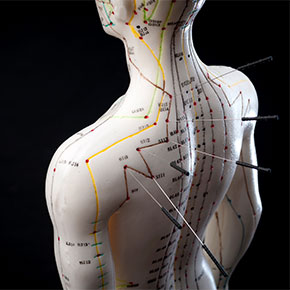
Oriental medicine is based on an energetic model rather than the biochemical model of Western medicine. The ancient Chinese recognized a vital energy behind all life forms and life processes. They called this energy qi (pronounced chee). In developing an understanding of the prevention and cure of disease, healing practitioners discovered that energy flows along specific pathways called meridians. Each pathway is associated with a particular physiological system and internal organ. Disease arises due to a deficiency or imbalance of energy in the meridians and their associated physiological systems. Acupuncture points are specific sites along the meridians. Each point has a predictable effect upon the vital energy passing through it. Modern science has measured the electrical charge at these points, corroborating the locations of meridians. Traditional Oriental Medicine uses an intricate system of pulse and tongue diagnosis, palpation of points and meridians, medical history and other signs and symptoms to create a composite diagnosis. A treatment plan is then formulated to induce the body to a balanced state of health.
Many conditions may be alleviated very rapidly by acupuncture and Oriental medicine. However, some conditions that have developed over a course of years will be relieved only with slow, steady progress. As in any form of healing, the patient's attitude, diet, determination and lifestyle will affect the outcome of a course of treatment. Patients are encouraged to actively participate in their healing process. Although Oriental medicine can treat most conditions, there are circumstances that can be dealt with more effectively by Western medicine. In such cases, your acupuncturist will recommend you contact a Western medical doctor. Acupuncture and Oriental medicine should be seen as complementary to Western medicine.
What conditions does acupuncture treat?
The World Health Organization (WHO) recognizes acupuncture and traditional Oriental medicine's ability to treat more than 43 common disorders including:
- Gastrointestinal disorders, such as food allergies, peptic ulcer, chronic diarrhea, constipation, indigestion, gastrointestinal weakness, anorexia and gastritis;
- Urogenital disorders, including stress incontinence, urinary tract infections and sexual dysfunction;
- Gynecological disorders, such as irregular, heavy, or painful menstruation, infertility in women and men, and premenstrual syndrome (PMS);
- Respiratory disorders, such as emphysema, sinusitis, asthma, allergies and bronchitis;
- Disorders of the bones, muscles, joints and nervous system, such as arthritis, migraine headaches, neuralgia, insomnia, dizziness and low back, neck and shoulder pain;
- Circulatory disorders, such as hypertension, angina pectoris, arteriosclerosis and anemia;
- Emotional and psychological disorders, including depression and anxiety;
- Addictions, such as alcohol, nicotine and drugs;
- Eye, ear, nose and throat disorders;
- Supportive therapy for other chronic and painful debilitating disorders.
Is acupuncture safe? Is it painful?
In the hands of a comprehensively trained acupuncturist, your safety is assured. Acupuncture needles are sterile and are either disposable or autoclaved between treatments. If you have a preference, you should discuss the type of needles to be used with your practitioner.
Undergoing an acupuncture treatment bears no resemblance to the feeling of receiving an injection, since the main source of pain from injections is the larger diameter, hollow needle and the medication being forced into the tissue by pressure. Acupuncture needles are very fine and flexible, about the diameter of a human hair. In most cases, insertion by a skilled practitioner is performed without discomfort. You may experience a sense of heaviness or electricity in the area of insertion. Most patients find the treatments very relaxing and many fall asleep during treatment. In some cases, your practitioner may also recommend herbs, or dietary, exercise or lifestyle changes.
What is the salary range of a licensed practitioner of acupuncture and Oriental medicine?
According to Salary.com, acupuncturists' gross annual income in 2006 ranged from $30,405 per year to over $105,000 per year, depending on the practice. For example, practitioners who worked in hospitals made over $65,000 per year, while practitioners who worked for non-profit organizations made under $35,000 per year.
What is a typical day for an acupuncturist?
A session with a client runs between a half hour to an hour (a first visit is often longer). After diagnosing the patient and discussing treatment, the practitioner then performs the acupuncture. At the end of the session, the acupuncturist may prescribe herbal therapies for the patient to use at home. Typically, the majority of the practitioner's time during a session is spent on the actual performance of acupuncture and related therapies such as moxibustion.
Like most medical practitioners, part of the acupuncturists' time is spent on the performance of office duties such as filling out charts and maintaining patients' files. Some acupuncturists work alone and perform all aspects of the office duties, others work as part of a larger team with appropriate support staff to help them.
What states regulate Oriental Medicine and Acupuncture?
Jurisdictions with acupuncture and Oriental medicine statutes:
Alaska, Arizona, Arkansas, California* (has its own exam), Colorado, Connecticut, District of Columbia, Florida, Hawaii, Illinois, Iowa, Louisiana* (has no exam), Maine, Maryland, Massachusetts, Minnesota, Missouri, Montana, Nevada* (has its own exam), New Hampshire, New Jersey, New Mexico, New York, North Carolina, Oregon, Pennsylvania, Rhode Island, South Carolina, Texas, Utah, Vermont, Virginia, Washington, West Virginia, Wisconsin
*Do not use NCCAOM
States that allow practice through a ruling by the Board of Medical Examiners:
Kansas and Michigan
States in which legislation has been introduced:
Alabama, Georgia, Idaho, Indiana, Kentucky, Michigan, Nebraska, Ohio, Oklahoma, Tennessee, Wyoming
If you have information or need assistance regarding legislation in progress, please contact the Acupuncture Alliance.
What are the state-by-state requirements for licensure?
The following is an outline of formal schooling and examination requirements for licensure in the various states. It does not provide complete information regarding eligibility requirements. For example, some states require applicants to graduate from an accredited college or fulfill an English language requirement. A few recognize apprenticeship as a route to licensure; most do not.
ALASKA
Formal schooling requirements: A course of study consistent with the core curriculum and guidelines of the CCAOM
Undergraduate Requirements: None
Examination: NCCAOM examination in acupuncture
Contact:
Department of Commerce and Economic Development
Division of Occupational Licensing - Acupuncture
PO Box 110806
Juneau, AK 99811-0806
(907) 465-2695
ARIZONA
Formal schooling requirements: 1850 hours including 800 hours of clinical
Undergraduate Requirements: None
Examination: NCCAOM examination in acupuncture
Contact:
Arizona Board of Acupuncture Examiners
1400 W. Washington #230
Phoenix, AZ 85007
(602) 542-3095
ARKANSAS
Formal schooling requirements: 4 academic years including 800 hours of clinical
Undergraduate Requirements: 60 semester credit hours, including 30 credit hours in science
Examination: NCCAOM examination in acupuncture and Chinese herbology
CALIFORNIA
Formal schooling requirements: 4 academic years (2348 hours including 800 clinical) with a minimum of 1548 hours of theory including biology, organic biochemistry, physics, psychology, anatomy and physiology, pathology, nutrition and vitamins (400 hours); history of medicine, medical terminology (30 hours); clinical sciences such as internal medicine, pharmacology, neurology, surgery and clinical medicine including dentistry, nursing, chiropractic and homeopathy, western pharmacology and CPR (128 hours); Tai Chi, Qi Gong, traditional Oriental medicine theory and diagnosis, needling techniques, moxibustion, and acupressure (660 hours); herbology (300 hours including botany); practice management and ethics (30 hours)
Undergraduate Requirements: None
Examination: California examination
Contact:
Department of Consumer Affairs
Medical Board, Acupuncture Committee
1424 Howe Ave. Suite 37
Sacramento, CA 95825-3233
(916) 263-2680
Additional California Information
For acupuncture, the schools in California conform to the standards set by the national accreditation body, ACAOM, that is recognized by the federal Department of Education. To be licensed, you must graduate from an accredited school and pass the national board exam. Unlike some states, California also requires additional hours of training in herbal medicine and the passing of an herbal medicine exam. The California schools all include this as part of their regular master's program.
In most cases, licensing of acupuncture is reciprocal (meaning that if you are licensed in one state, you are licensed in all the states that license acupuncture). However, approximately 20 states do not license the profession and a few do not allow the independent practice of acupuncture. It's worth checking BEFORE you move. For the most accurate and up-to-date information concerning the laws governing acupuncture, the National Acupuncture Foundation publishes a book called "Acupuncture and Oriental Medicine Laws." Most schools have a current copy available in their library or career counseling center.
COLORADO
Formal schooling requirements: NCCAOM certification
Undergraduate Requirements: None
Examination: NCCAOM examination in acupuncture
Contact:
Department of Regulatory Agencies
Office of Acupuncturists Registration
1560 Broadway, Suite 680
Denver, CO 80202 - 5140
(303) 894-2464
CONNECTICUT
Formal schooling requirements: 1350 hours including 500 hours of clinical
Undergraduate Requirements: 60 semester hours
Examination: NCCAOM examination in acupuncture
Contact:
Department of Public Health
Division of Medical Quality Assurance
410 Capitol Ave.
MS # 12 APP P.O. Box 34308
Hartford, CT 06134-0308
(860) 509-7562
DISTRICT OF COLUMBIA
Formal schooling requirements: 3 academic years including 500 hours of clinical
Undergraduate Requirements: None
Examination: NCCAOM examination in acupuncture
Contact:
Advisory Committee on Acupuncture
D.C. Board of Medicine
614 H. Street. N.W. Room 108
Washington, DC 20001
(202) 727-5365
FLORIDA
Formal schooling requirements: 3 years (2413 hours including 600 clinical) including 330 hours of biomedical clinical science (including 90 hours of pathology, 120 hours of anatomy and physiology, and 120 hours of western biomedical and diagnostic terminology); 1155 hours of traditional Oriental acupuncture diagnosis and treatment (including 705 hours of Oriental medical theory, diagnosis and treatment in acupuncture and related studies and 450 hours of herbal studies); 30 hours of adjunctive therapies, 200 hours electives of adjunctive therapies; 15 hours of universal precautions; 3 of HIV/AIDS, and 20 in Florida laws
Effective July 1, 2001, a 4-year course of study in acupuncture and Oriental medicine including western anatomy, western physiology, western pathology, western biomedical terminology, first aid, and CPR
Any person who enrolled before August 1, 1997 must have completed a 2-year course of study including courses in western anatomy, Western physiology, and Western pathology Undergraduate Requirements: 60 college credits
Examination: NCCAOM examination in acupuncture
Contact:
Division of Medical Quality Assurance
Board of Acupuncture
220 Capital Circle S.E., Bin #C 06
Tallahassee, FL 32399-32560761
(904) 488-6015
HAWAII
Formal schooling requirements: 1500 hours including 2 academic years (600 hours) of didactic plus 12 months (900 hours) clinical
Undergraduate Requirements: None
Examination: NCCAOM examination in acupuncture
Contact:
Department of Commerce and Consumer Affairs
Professional and Vocational Licensing Division
Board of Acupuncture
PO Box 3469
Honolulu, Hawaii 96801
(808) 586-3000 (for application information)
ILLINOIS
Formal schooling requirements: NCCAOM certification
Undergraduate Requirements: None
Examination: NCCAOM examination in acupuncture
Contact:
Illinois Department of Professional Regulation
320 W. Washington Street
Springfield, IL 62786
(217) 782-8556
IOWA
Formal schooling requirements: 2 years
Undergraduate Requirements: 60 semester hours including at least 30 semester hours from an accredited institution of higher education other than acupuncture school. Of the 60 semester hours, 12 shall be in the biosciences such as human anatomy, physiology, and general or advanced biology
Examination: NCCAOM examination in acupuncture
Contact:
Licensure and Administration
Iowa Board of Medical Examiners
1209 E. Court Avenue
Des Moines, IA 50319-0180
(515) 281-6489
LOUISIANA
Formal schooling requirements: 36 months
Undergraduate Requirements: None specified
Examination: None
Contact:
Louisiana State Board of Medical Examiners
830 Union Street, Suite 100
New Orleans, LA 70112-1449
(504) 524-6763
MAINE
Formal schooling requirements: 1000 hours of didactic plus 300 hours of clinical
Undergraduate Requirements: Baccalaureate degree, a professional nursing license or physician's assistant training and examination
Examination: NCCAOM examination in acupuncture
Contact:
Dept. of Professional and Financial Regulation
Office of Licensing and Enforcement, State House Station #35
Augusta, ME 04333
(207) 624-8603
MARYLAND
Formal schooling requirements: 1800 hours, including 300 clinical hours
Undergraduate Requirements: None specified
Examination: NCCAOM examination in acupuncture
Contact:
State Board of Acupuncture
Room 320
4201 Patterson Avenue
Baltimore, MD 21215
(410) 764-4766
MASSACHUSETTS
Formal schooling requirements: 1350 clinical/didactic hours combined including 100 hours of clinic with sole responsibility for diagnosis and treatment of patients, 30 hours of herbal training Undergraduate Requirements: 2 academic years including human anatomy and physiology and general biology (2 hours each)
Board Certification for Chinese Herbology: completion of ACAOM herbology program or its equivalent
Examination: NCCAOM examination in acupuncture
Contact:
Board of Registration in Medicine
Acupuncture Unit
10 West Street 3d Floor
Boston, MA 02111
(617)727-3086, #363
MINNESOTA
Formal schooling requirements: NCCAOM certification
Undergraduate Requirements: None
Examination: NCCAOM examination in acupuncture
Contact:
Minnesota Board of Medical Practice
University Park Plaza
2829 University Ave. SE - Suite 400
Minneapolis, MN 55414-3246
MISSOURI
Formal schooling requirements: NCCAOM certification
Undergraduate Requirements: None
Examination: NCCAOM examination in acupuncture
Contact:
State Board of Chiropractic Examiners
PO Box 672
Jefferson City, MO 65102-0672
(573) 751-2104
MONTANA
Formal schooling requirements: 1000 hours
Undergraduate Requirements: None
Examination: NCCAOM examination in acupuncture
Contact:
Department of Commerce
Board of Medical Examiners
111 N. Jackson
PO Box 200513
Helena, MT 59620-0513
(406) 444-4284
NEVADA
Formal schooling requirements: DOM—3-year course in acupuncture or a 4-year course in Oriental medicine plus 6 years of practice; Acupuncture Assistant—3-year course in acupuncture
Undergraduate Requirements: None
Examination: Nevada examination
Contact:
Nevada State Board of Oriental Medicine
201 Sarah Drive
Carson City, NV 89706
(702) 486-4279
NEW HAMPSHIRE
Formal schooling requirements: ACAOM or board approved, including anatomy and physiology
Undergraduate requirements: Baccalaureate, registered nurse or physician's assistant degree
Examination: NCCAOM examination in acupuncture
Contact:
New Hampshire Board of Acupuncture Licensing
Department of Health and Human Services
6 Hazen Drive
Concord, NH 03301-6527
(603) 271-5127
NEW JERSEY
Formal schooling requirements: 2 year program
Undergraduate Requirements: Baccalaureate degree
Examination: NCCAOM examination in acupuncture
Contact:
Board of Medical Examiners
Department of Law and Public Safety
Acupuncture Examining Board
140 East Front Street, 2nd Floor
Trenton, NJ 08608
(609) 826-7100
NEW MEXICO
Formal schooling requirements: Entered prior to September 30, 1993, and application for licensing prior to July 15, 2000: 1800 clock hours, including 950 hours of didactic and 750 hours of clinical Entered after September 30, 1993: 2400 clock hours of classes including 1100 hours of didactic and 900 hours of clinical
Undergraduate Requirements: None
Examination: NCCAOM examination in acupuncture and Chinese herbology
Contact:
New Mexico Board of Acupuncture and Oriental Medicine
PO Box 25101
Santa Fe, NM 87504
(505) 476-7100
NEW YORK
Formal schooling requirements: 3-year program of didactic and clinical work
Undergraduate Requirements: 60 semester hours including 9 semester hours of biosciences
Examination: NCCAOM examination in acupuncture
Contact:
NY State Board for Acupuncture
State Education Department
Cultural Educational Center Room 3103
Albany, NY 12230
(518) 473-0221
NORTH CAROLINA
Formal schooling requirements: 3-year program
Undergraduate Requirements: None
Examination: NCCAOM examination in acupuncture
Contact:
North Carolina Acupuncture Licensing Board
1418 Aversboro Rd.
Garner, NC 27529-4547
(919) 779-5642
OREGON
Formal schooling requirements: ACAOM accredited or candidacy status or equivalent
Undergraduate: None
Examination: NCCAOM examination in acupuncture
Contact:
Board of Medical Examiners
620 Crown Plaza
1500 SW First Avenue
Portland, OR 97201-5770
(503) 229-5770
PENNSYLVANIA
Formal schooling requirements: 2 academic years
Undergraduate Requirements: 2 years
Examination: NCCAOM examination in acupuncture
Contact:
Board of Osteopathic Examiners/Board of Medical Examiners
PO Box 2649
Harrisburg, PA 17105
(717) 783-4858
RHODE ISLAND
Formal schooling requirements: Satisfactory to the department
Undergraduate Requirements: None
Examination: NCCAOM examination in acupuncture
Contact:
State of Rhode Island & Providence Plantations
Department of Health, Cannon Building
Three Capitol Hill Rm. 104
Providence, RI 02908
(401) 277-2827
SOUTH CAROLINA
Formal schooling requirements: NCCAOM certification.
Undergraduate Requirements: None
Examination: NCCAOM examination in acupuncture
Contact:
Department of Labor, Licensing and Regulation
Board of Medical Examiners 110 Centerview Dr. Suite 202
PO Box 11289
Columbia, SC 29211-1289
(803) 896-4500
TEXAS
Formal schooling requirements: 1800 didactic, including anatomy-histology, bacteriology, physiology, symptomatology, pathology, meridian and point locations, hygiene, and public health plus at least two terms of clinical
Undergraduate Requirements: 60 semester hours including basic science courses
Examination: NCCAOM examination in acupuncture and Chinese herbology
Contact:
Texas State Board of Medical Examiners
PO Box 2018 MC-231
Austin, TX 78768-2018
(512) 305-7067
UTAH
Formal schooling requirements: NCCAOM certification
Undergraduate Requirements: None
Examination: NCCAOM examination in acupuncture
Contact:
Division of Occupational and Professional Licensing
160 East 300 South, Box 146741
Salt Lake City, UT 84114-6741
(801) 530-6740
VERMONT
Formal schooling requirements: 3-year program including 800 hours of clinical
Undergraduate Requirements: None
Examination: NCCAOM examination in acupuncture
Contact:
Office of Professional Regulation
109 State Street
Montpelier, VT 05609-1106
(802) 828-2373
VIRGINIA
Formal schooling requirements: Graduate of ACAOM accredited school: 1000 hours with 700 didactic and 250 clinical hours in no less than 18 months. Individuals who graduated after July 1, 1990 must document 90 semester credit hours of full time study
Non-accredited school: 2 year course with 1000 hours (700 didactic and 250 clinical) and 5 years of licensed practice in another state
Undergraduate Requirements: 2 academic years of not less than 60 semester credit hours including 18 semester hours in biological sciences (3 hours each in anatomy and physiology)
Examination: NCCAOM examination in acupuncture
Contact:
Virginia Board of Medicine
6606 W. Broad Street 4th Floor
Richmond, VA 23230-1717
(804) 662-9908
WASHINGTON
Formal schooling requirements: 2 years of academic coursework including 75 credits of acupuncture sciences (750 hours) and 45 credits (450 hours) of Western sciences including anatomy, physiology, bacteriology, biochemistry, pathology, hygiene, survey of Western clinical sciences and CPR; 1 academic year of clinical including 29 quarter credits of supervised practice with 100 hours of observation and 400 documented patient treatments with 100 different patients
Undergraduate Requirements: None
Examination: NCCAOM examination in acupuncture
Contact:
Department of Health
1300 S.E. Quince Street
PO Box 47868
Olympia, WA 98504-7868
(360) 664-3230
WEST VIRGINIA
Formal schooling requirements: 1800 hours including 300 clinical hours
Undergraduate Requirements: None
Examination: NCCAOM examination in acupuncture
Contact:
Board Secretary
PO Box 252
Huntington, WV 25707-0252
(304) 529-4558
WISCONSIN
Formal schooling requirements: 2 years
Undergraduate Requirements: None
Examination: NCCAOM examination in acupuncture
Contact:
Dept. of Regulation and Licensure
Bureau of Health Service Professions
Acupuncture Certification
PO Box 8935
1400 E. Washington Ave.
Madison, WI 53708
(608) 266-0070
Can one practice in many different states?
Thirty-two states and the District of Columbia use NCCAOM Certification as the main examination criteria for licensure. Each state may also choose to set additional eligibility criteria (usually additional academic or clinic hours) -- Texas and California are two states with additional requirements. A small number of states have additional jurisprudence or practical examination requirements such as passing the CNT (Clean Needle Technique) exam.
Some of the confusion may come from moving from a state with lower requirements to a state with higher requirements. You may be able to satisfy these requirements by taking some additional hours or passing the additional exams. The American Association of Oriental Medicine is a national professional organization that helps its members deal with questions like this—if you think you're going to be moving around a lot, contact them for additional information and help.
What laws apply to the practice of A&OM? (e.g. for states that don't regulate).
In states that do not recognize acupuncturists as a licensed medical practitioner, the acupuncturist may be required to work under the supervision of another medical person such as a medical doctor or an osteopathic doctor. In a few states, the practice of acupuncture is restricted to medical doctors or their equivalent.
What are the prerequisites for attending school?
Many acupuncture schools do not require candidates to have an undergraduate degree. However, all ACAOM accredited schools require at least two years of undergraduate study, such as community college, prior to entry. Many state that they prefer applicants to have a bachelor's degree.
What is the cost of school?
This varies greatly by school. In doing a survey accredited ACAOM schools, I found that it could range from $6000 to $12,000 per year for tuition and supplies. Most programs last three years.
Is financial aid available?
If you need financial assistance, you may want to attend a college accredited by the Accreditation Commission for Acupuncture and Oriental Medicine (ACAOM). ACAOM is recognized by the U.S. Department of Education and students enrolled in accredited programs may be eligible for federal student loans.
What is the value of attending an accredited school?
The National Certification Commission for Acupuncture and Oriental Medicine, which provides the examination required in most states, requires that individuals who enroll in an accupuncture or Oriental medicine college in the U.S. after July 1, 1999 must graduate from a college that is ACAOM accredited or candidacy at the time of graduation. Since some states purchase the NCCAOM exam and administer it themselves to candidates that meet their licensing requirements (not NCCAOM's), you should check the licensing requirements of states in which you might wish to practice. Also check each college's accreditation status or intentions when investigating schools in the U.S.
How long does it take to graduate?
Most acupuncture degrees are structured as a three-year master's degree. Some programs offer night or part-time programs and allow students to take up to five years to finish their degree.
What is the difference between a master's program and a degree program?
There isn't a difference—the degree is a master's degree. Sometimes it is called a Masters in Acupuncture (MA) or Master's in Acupuncture and Oriental Medicine (MAOM)—generally Oriental Medicine refers to extra training in herbs and therapies other than acupuncture.
Currently there are three or four schools working on a Doctorate degree—this hasn't been accepted yet by the national accrediting body or adopted by the professional organizations. The idea is that the Doctorate would eventually be equivalent to a Doctorate in Medicine (MD) in licensing and professional responsibility.
Is there a doctorate program for Acupuncture and Oriental Medicine?
After several years of development and discussion, the Accreditation Commission presented a blueprint of a doctorate in Oriental medicine at its meeting in November 1998 and today there are many doctorate programs offered in acupuncture and Oriental medicine.
Where can an existing MD/DC get a faster, more intensive training?
The American Academy of Medical Acupuncture provides accelerated training for physicians. Their Canadian counterpart is the Canadian Medical Acupuncture Society which provides similar courses for Canadian health professionals. Many acupuncture schools provide advanced standing to health professionals and have evening classes which do not interfere with regular working hours.
When adding acupuncture under an already existing license (DC, DO or MD), the practitioner needs to check with the appropriate state boards. The number of hours training required varies greatly depending on the state regulations.
NCCAOM - National Certification Commission for Acupuncture and Oriental Medicine
11 Canal Center Plaza, Suite 300
Alexandria, VA 22314
Phone: (703) 548-9004
Fax: (703) 548-9079
Where can I get training?
- Arizona
Phoenix Institute of Herbal Medicine & Acupuncture (PIHMA) - Phoenix
Arizona School of Acupuncture & Oriental Medicine - Tucson
Asian Institute of Medical Studies - Tucson
Texas College of Traditional Chinese Medicine - Training in Austin, TX
College of Acupuncture & Oriental Medicine - Training in Whittier, CA
- California
Alhambra Medical University - Acupuncture & Chinese Medicine Program - Alhambra
Acupuncture & Integrative Medicine College - Berkeley
Dongguk Royal University - Los Angeles
Samra University of Oriental Medicine - Los Angeles
Southern California University School of Oriental Medicine & Acupuncture - Los Angeles
Yo San University of Traditional Chinese Medicine - Los Angeles
Academy of Chinese Culture & Health Sciences - Oakland
Pacific College of Oriental Medicine, San Diego - San Diego
American College of Traditional Chinese Medicine - San Francisco
Five Branches Institute - San Jose
Five Branches Institute - Santa Cruz
Emperor's College of Traditional Oriental Medicine - Santa Monica
College of Acupuncture & Oriental Medicine - Whittier
Institute of Taoist Education & Acupuncture - Training in Louisville, CO
- Canada - Alberta
Canadian Institute of Traditional Chinese Medicine (CITCM) - Calgary
Ongiara College of Acupuncture and Moxibustion - Training in Ontario, Canada
Toronto School of TCM - Training in Toronto, ON
- Canada - British Columbia
PCU College of Holistic Medicine - Burnaby
Academy of Classical Oriental Sciences - Nelson
Pacific Rim College - Victoria
- Canada - Manitoba
Ongiara College of Acupuncture and Moxibustion - Training in Ontario, Canada
Toronto School of TCM - Training in Toronto, ON
Texas College of Traditional Chinese Medicine - Training in Austin, TX
- Canada - New Brunswick
Ongiara College of Acupuncture and Moxibustion - Training in Ontario, Canada
Toronto School of TCM - Training in Toronto, ON
Texas College of Traditional Chinese Medicine - Training in Austin, TX
- Canada - Newfoundland
Toronto School of TCM - Training in Toronto, ON
Texas College of Traditional Chinese Medicine - Training in Austin, TX
- Canada - Nova Scotia
Ongiara College of Acupuncture and Moxibustion - Training in Ontario, Canada
Toronto School of TCM - Training in Toronto, ON
- Canada - Ontario
Ongiara College of Acupuncture and Moxibustion - Fort Erie
Shiatsu School of Canada & SSC Acupuncture Institute - Toronto
Toronto School of TCM - Toronto
School of Acupuncture & Oriental Medicine @ NYCC - Training in Seneca Falls, NY
College of Acupuncture & Oriental Medicine - Training in Whittier, CA
- Canada - PE Island
Toronto School of TCM - Training in Toronto, ON
Texas College of Traditional Chinese Medicine - Training in Austin, TX
- Canada - Quebec
Toronto School of TCM - Training in Toronto, ON
Texas College of Traditional Chinese Medicine - Training in Austin, TX
- Canada - Saskatchewan
Texas College of Traditional Chinese Medicine - Training in Austin, TX
Ongiara College of Acupuncture and Moxibustion - Training in Ontario, Canada
Toronto School of TCM - Training in Toronto, ON
- China
American College of Traditional Chinese Medicine - Study Abroad
Five Branches Institute - Study Abroad
- Colorado
Colorado School of Traditional Chinese Medicine - Denver
Institute of Taoist Education & Acupuncture - Louisville
Texas College of Traditional Chinese Medicine - Training in Austin, TX
College of Acupuncture & Oriental Medicine - Training in Whittier, CA
- Connecticut
University of Bridgeport Acupuncture Institute - Bridgeport
- District of Columbia
Yo San University of Traditional Chinese Medicine - Training in Los Angeles, CA
- Florida
Academy for Five Element Acupuncture - Gainesville
Dragon Rises College of Oriental Medicine - Gainesville
Acupuncture & Massage College - Miami
Florida College of Integrative Medicine - Orlando
East West College of Natural Medicine - Sarasota
Institute of Taoist Education & Acupuncture - Training in Louisville, CO
- Georgia
Academy for Five Element Acupuncture - Training in Gainesville, FL
- Idaho
Yo San University of Traditional Chinese Medicine - Training in Los Angeles, CA
- Illinois
Midwest College of Oriental Medicine - Chicago
Pacific College of Oriental Medicine, Chicago - Chicago
National University of Health Sciences - Acupuncture & Oriental Medicine - Lombard
Ongiara College of Acupuncture and Moxibustion - Training in Ontario, Canada
Texas College of Traditional Chinese Medicine - Training in Austin, TX
- Indiana
Ongiara College of Acupuncture and Moxibustion - Training in Ontario, Canada
Yo San University of Traditional Chinese Medicine - Training in Los Angeles, CA
- Kansas
Texas College of Traditional Chinese Medicine - Training in Austin, TX
Yo San University of Traditional Chinese Medicine - Training in Los Angeles, CA
- Kentucky
Ongiara College of Acupuncture and Moxibustion - Training in Ontario, Canada
Yo San University of Traditional Chinese Medicine - Training in Los Angeles, CA
- Louisiana
Texas College of Traditional Chinese Medicine - Training in Austin, TX
Yo San University of Traditional Chinese Medicine - Training in Los Angeles, CA
Institute of Taoist Education & Acupuncture - Training in Louisville, CO
College of Acupuncture & Oriental Medicine - Training in Whittier, CA
- Maine
Ongiara College of Acupuncture and Moxibustion - Training in Ontario, Canada
Yo San University of Traditional Chinese Medicine - Training in Los Angeles, CA
- Maryland
Tai Sophia Institute - Master of Acupuncture Program - Laurel
Institute of Taoist Education & Acupuncture - Training in Louisville, CO
- Massachusetts
New England School of Acupuncture - Newton
Ongiara College of Acupuncture and Moxibustion - Training in Ontario, Canada
Texas College of Traditional Chinese Medicine - Training in Austin, TX
School of Acupuncture & Oriental Medicine @ NYCC - Training in Seneca Falls, NY
- Michigan
Yo San University of Traditional Chinese Medicine - Training in Los Angeles, CA
Ongiara College of Acupuncture and Moxibustion - Training in Ontario, Canada
- Minnesota
Northwestern Health Sciences University Acupuncture Program - Bloomington
American Academy of Acupuncture and Oriental Medicine - Roseville
Ongiara College of Acupuncture and Moxibustion - Training in Ontario, Canada
- Missouri
Texas College of Traditional Chinese Medicine - Training in Austin, TX
Yo San University of Traditional Chinese Medicine - Training in Los Angeles, CA
- Nevada
Yo San University of Traditional Chinese Medicine - Training in Los Angeles, CA
College of Acupuncture & Oriental Medicine - Training in Whittier, CA
- New Jersey
Eastern School of Acupuncture & Traditional Medicine - Montclair
School of Acupuncture & Oriental Medicine @ NYCC - Training in Seneca Falls, NY
- New Mexico
Texas College of Traditional Chinese Medicine - Training in Austin, TX
Yo San University of Traditional Chinese Medicine - Training in Los Angeles, CA
- New York
New York College of Traditional Chinese Medicine - Mineola
Pacific College of Oriental Medicine, New York - New York
Swedish Institute - New York
Tri-State College of Acupuncture - New York
School of Acupuncture & Oriental Medicine @ NYCC - Seneca Falls
New York College of Health Professions - Syosset Long Island
Academy for Five Element Acupuncture - Training in Gainesville, FL
Ongiara College of Acupuncture and Moxibustion - Training in Ontario, Canada
Yo San University of Traditional Chinese Medicine - Training in Los Angeles, CA
Institute of Taoist Education & Acupuncture - Training in Louisville, CO
College of Acupuncture & Oriental Medicine - Training in Whittier, CA
- North Carolina
Academy for Five Element Acupuncture - Training in Gainesville, FL
Yo San University of Traditional Chinese Medicine - Training in Los Angeles, CA
School of Acupuncture & Oriental Medicine @ NYCC - Training in Seneca Falls, NY
- Ohio
SHI Medical Massage & Traditional Chinese Acupuncture School - Lebanon
Ongiara College of Acupuncture and Moxibustion - Training in Ontario, Canada
Texas College of Traditional Chinese Medicine - Training in Austin, TX
Yo San University of Traditional Chinese Medicine - Training in Los Angeles, CA
School of Acupuncture & Oriental Medicine @ NYCC - Training in Seneca Falls, NY
- Oklahoma
Texas College of Traditional Chinese Medicine - Training in Austin, TX
Yo San University of Traditional Chinese Medicine - Training in Los Angeles, CA
- Oregon
Oregon College of Oriental Medicine - Portland
Institute of Taoist Education & Acupuncture - Training in Louisville, CO
College of Acupuncture & Oriental Medicine - Training in Whittier, CA
- Pennsylvania
Ongiara College of Acupuncture and Moxibustion - Training in Ontario, Canada
Yo San University of Traditional Chinese Medicine - Training in Los Angeles, CA
School of Acupuncture & Oriental Medicine @ NYCC - Training in Seneca Falls, NY
- South Carolina
Academy for Five Element Acupuncture - Training in Gainesville, FL
- Tennessee
Academy for Five Element Acupuncture - Training in Gainesville, FL
Ongiara College of Acupuncture and Moxibustion - Training in Ontario, Canada
Texas College of Traditional Chinese Medicine - Training in Austin, TX
Yo San University of Traditional Chinese Medicine - Training in Los Angeles, CA
- Texas
Academy of Oriental Medicine at Austin - Austin
Texas College of Traditional Chinese Medicine - Austin
ATI Career Training Center - Dallas/Fort Worth
American College of Acupuncture & Oriental Medicine - Houston
College of Acupuncture & Oriental Medicine - Training in Whittier, CA
- Utah
Texas College of Traditional Chinese Medicine - Training in Austin, TX
Yo San University of Traditional Chinese Medicine - Training in Los Angeles, CA
College of Acupuncture & Oriental Medicine - Training in Whittier, CA
- Vermont
Ongiara College of Acupuncture and Moxibustion - Training in Ontario, Canada
- Virginia
Yo San University of Traditional Chinese Medicine - Training in Los Angeles, CA
- Washington
Bastyr University - Acupuncture Program - Kenmore
Institute of Taoist Education & Acupuncture - Training in Louisville, CO
College of Acupuncture & Oriental Medicine - Training in Whittier, CA
- West Virginia
Ongiara College of Acupuncture and Moxibustion - Training in Ontario, Canada
- Wisconsin
Midwest College of Oriental Medicine - Racine
Ongiara College of Acupuncture and Moxibustion - Training in Ontario, Canada
Search our directory and find more: Massage Therapy Schools, Acupuncture, Chiropractic, and more.