
By: Natural Healers Staff

Lisa McNeil, M. Ed, CFSS-M

Taffie Lewis, ABMP
Updated: January 27, 2026

By: Natural Healers Staff
Lisa McNeil, M. Ed, CFSS-M
Taffie Lewis, ABMP
Updated: January 27, 2026

A massage therapist specializes in manipulating clients’ soft tissues and joints to address injuries, alleviate muscle tension, and promote overall well-being. Using various techniques and tools such as hands, fingers, forearms, elbows, and feet, they provide therapeutic massages tailored to each client’s needs. Lotions, oils, and massage tables or chairs are commonly utilized during sessions to enhance the massage experience.
Massage therapists use their expertise to cater their massage techniques to the needs of the client. Regardless of a client’s motivations, they strive to provide a satisfying and relaxing sensory experience to every customer.
In This Article
Many different settings—from traditional spas to cruise ships to chiropractic offices—recognize the value of massage therapy as a service for their customers. Not only have job opportunities for this profession expanded rapidly but the types of workplaces and duties of a massage therapist have as well.
A massage therapist helps people manage a health condition or enhance wellness by using touch, pressure, and movement to manipulate the body’s muscles and soft tissues. Different techniques, also called modalities, can achieve different goals, such as:
Most massage therapy programs are designed to provide students with the core knowledge and experience they need to qualify for employment as quickly as possible.
As you gain professional experience, you can work toward specialization. “I tell my students to use your massage program to gain the license but take continuing education to create your identity as a therapist,” says McNeil. The good news? Online massage therapy courses are available, especially for entry-level programs and continuing education requirements.
Now, let’s jump back into what you’ll be doing as a massage therapist, which initially may mean choosing to practice in a number of fields:

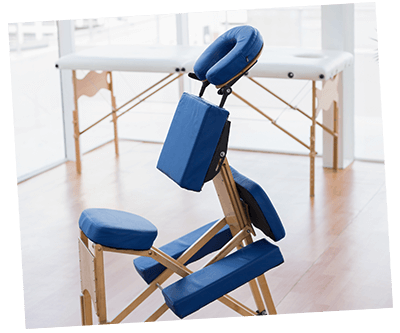

Aesthetic massage includes some of the most common types of massage therapy techniques. These techniques are aimed at toning tissues, releasing tension, and encouraging relaxation.
All massage therapy students graduate with the ability to perform relaxation and self-care massage therapy, credentials that typically qualify them for jobs in franchises, gyms, and some spas without further specialization, McNeil says.
Common aesthetic massage techniques include Swedish massage, hot stone, aromatherapy, and chair massage.
Massage therapy is especially experiencing a renaissance when it comes to medical applications. Many doctors, physical therapists, chiropractors, and other medical professionals are incorporating massage into a patient’s treatment plan to address pain and specific conditions with massage modalities such as deep tissue, trigger point, neuromuscular, myofascial release therapy, and other techniques.
“Because of the opioid epidemic, for example, you are now seeing more medical referrals to massage therapy and it is now starting to become more recognized for pain relief,” says McNeil of the growth in medical massage. “I believe you will also be seeing more pediatric massage therapists blazing trails with children living within the autism spectrum. With the right training, massage students can position themselves as medical providers and build a reputation within the medical community.”
To pursue this path, she recommends choosing more science-based continuing education programs. “Because massage therapy is such a diverse field, you’ll find a lot of new age, esoterical specialties, but those aren’t the massage therapist skills the medical field is looking for. Precision neuromuscular therapy, NeuroKenetic Therapy—these are more science-based and in demand.”
Massage therapists can also pursue a wide range of other specialized techniques. Some of these treat a particular type of client, such as prenatal massage or sports massage, while other specializations concentrate on unique and related applications, such as Reiki, Tui Na massage, Trager® therapy, or the Feldenkrais® Method. Specialized massage can be performed in a wide range of environments, including spas, wellness centers, and onsite at a client’s home.
You’ve attained the training, now it’s time to put your new massage skills to use and pay off that massage school tuition bill that just arrived in the mail.
Massage therapists are employed in a wide range of work environments that include spas, resorts, gyms, medical offices, and private practice. However, given the part-time nature of the job, 19% of massage therapists reported working in more than one practice arrangement, according to the AMTA.
Here are some of the most common work environments for massage therapists:
Find comprehensive information about becoming a massage therapist in the top states for the field. Read about required education, exams, licensing and find resources to help you thrive as a massage therapist.
Whatever type of work environment you pursue, most massage therapists report that they feel rewarded by their careers. In a survey of nearly 1,200 licensed massage therapists, 88% of participants said they were either “satisfied” or “very satisfied” with their careers.
You’ll enjoy this type of satisfaction if you’re prepared for what’s involved. Delivering massage therapy can require standing for long periods and repeatedly putting your body in awkward positions to apply a specific technique.
You’ll have to work to maintain your personal fitness to build physical strength and prevent on-the-job injuries. You’ll also need to build stamina so you can provide the same level of professional attitude and communication to every client, from the first to the last.
Although your job description may vary depending on the setting you work in, most massage therapists have a similar routine throughout the day. You’ll meet with a certain number of clients and massage them with the techniques or modalities you’ve learned, but that’s not all.
Your job duties as a massage therapist often include:
A career as a massage therapist likely means working part-time, with hours that can vary based on client demand. “Full-time for a massage therapist is technically less than 40 hours per week because of the nature of our job,” says McNeil. In her experience, a busy massage therapist typically has an average of 19 clients a week; however, the AMTA survey reports that therapists treat an average of 46 clients a month.
“I’ve seen an explosion in the field,” says Taffie Lewis, director of membership outreach at Associated Bodywork & Massage Professionals (ABMP), a national massage therapy association. “The massage therapist profession has become mainstream. More and more consumers are using massage through franchise memberships on a regular basis and making massage a part of their lifestyle.”
In the last decade, massage therapy has gained traction as a legitimate adjunct to traditional medical services.
“In the last decade, massage therapy has also gained traction as a legitimate adjunct to traditional medical services,” adds Lisa McNeil, M. Ed, CFSS-M, a licensed massage therapist at the Wisconsin-based Momentum Movement Clinic, who also provides manual therapy for U.S. Olympic team athletes and consults for wellness clinics and massage programs.
As a result, massage therapy training programs attract a variety of students from all different backgrounds. “But the core reason people most often choose this career is because they want to make a difference,” Lewis explains. “There are so many studies showing that massage can help our human condition far beyond relaxation.”
The changing perception of massage therapy has created a wide range of opportunities for professionals in the field. Between 2008 and 2018, the number of massage therapists increased by 25%, according to the American Massage Therapy Association’s (AMTA) 2019 Research Report. And with job growth predicted at 15.4% through 2034—with more than 29,000 new jobs—massage therapists can expect to see continued high demand for their skills.
Most massage therapy programs award a diploma, certificate, or similar technical degree upon completion, which typically meets the education requirements for state board licensing when it’s required, though you can pursue an associate’s or bachelor’s degree in massage. Some schools take it one step further and achieve an endorsement from a massage school accrediting body, such as the Commission on Massage Therapy Accreditation (COMTA).
No matter which type of program you choose, McNeil says it should have a solid focus on anatomy and physiology, especially if you want to focus on modalities that are more medicinal and therapeutic.
With the right training, massage students can position themselves as medical providers and build a reputation within the medical community.
If you live in the District of Columbia or one of the 46 states that regulate massage therapy professionals, you’ll have to meet your state’s requirements for licensing. This typically includes completing a minimum number of education hours (between 500 and 1,000) and passing a national exam like the Massage & Bodywork Licensing Examination (MBLEx).
Once licensed, you can earn board certification through the National Certification Board for Therapeutic Massage & Bodywork (NCBTMB), a designation that indicates you’ve achieved a level of professional knowledge and expertise beyond basic competencies. You can also prove that you’ve mastered an area of specialization by earning a certificate in one of board’s eight specialty areas of massage.
Not everyone is cut out for a career that entails so much direct contact with clients. If you’re thinking about a career in massage therapy, consider the following qualities to see if you might be the type of person that could be a successful massage therapist. Without these attributes, massage therapy may be especially challenging for you.
Your earning potential as a massage therapist depends on a wide range of factors that include your geographic location, years of experience, and area of specialization.
If you work for a massage therapy provider, your employer sets your rates and number of clients, though you may have access to benefits like:
If you operate a private practice, you can set your own rates and choose the number of clients you take on, but you’ll have to cover costs for all operating expenses and supplies.