
By: Joe Edwards
Updated: February 3, 2026

By: Joe Edwards
Updated: February 3, 2026
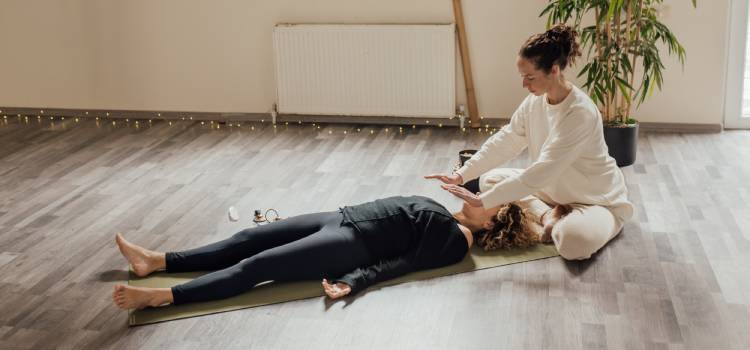
Reiki therapy is an alternative approach to therapeutic healing that revolves around the transfer of universal energy from therapist to client. Most commonly, a Reiki massage or treatment is associated with projecting healing energy through the palms of a practitioner. But each practitioner tailors a specific healing plan in alignment with their client’s needs.
In This Article
Reiki is often associated with alternative medicine types of healing and currently does not have definitive support from medical research and data in terms of effectiveness. Regardless, many seek out this type of therapy consistently and report positive changes post-treatment.
The word ‘reiki’ combines the Japanese words ‘rei’ (soul) and ‘ki’ (vital energy). It is said to be around 2,500 years old but was rediscovered by a Japanese Buddhist named Dr. Mikao Usui in the 20th century.
Reiki is an alternative form of therapy that promotes healing through the balancing of the vital life force energy that flows through all living things—integrating the mind, body, and spirit.
Reiki therapy is most commonly associated with palm-energy healing. Therefore, understanding how the body and mind consume and retain energy is essential for both practitioners and clients. Equally important is the study of how energy can be fluid and the overall transfer of energy from the practitioner to the client.
Reiki practitioners identify energy blockages or voids within their clients and focus on the transfer and balance of energy to mediate a client’s personal problems or medical ailments, such as stress and anxiety.
While massage is more vigorous and manipulates the muscles, Reiki uses only touch and sometimes merely the proximity of the healer’s hands to particular parts of the body, using 12 to 20 prescribed hand positions, depending on the training tradition.
Reiki is an alternative form of therapy that promotes healing through the balancing of the vital life force energy that flows through all living things—integrating the mind, body, and spirit.
Some massage therapists use Reiki techniques during their massage sessions, which is referred to as a “Reiki massage”, to promote physical, emotional, and mental well-being.
The focus of Reiki involves the study of energy balance, similar to that of other alternative therapies such as acupuncture. Reiki healing believes that you will produce various potential physical and mental benefits with an improvement in your energy flow and balance.
The process of becoming an established Reiki master varies for many reasons. This process depends on the state in which you intend to practice and how much education you wish to pursue before practicing.
Complete your Reiki education

Most candidates can find a variety of courses or teaching networks online. These classes and communities have different standards, but most focus on the balance and transfer of energy, the history of the field, and the most popular current Reiki applications and techniques.
You’ll learn how to be sensitive to your intuition and the energy currents of the eight “subtle bodies,” or energy zones, that correspond to different parts of the body.
Students may also choose to study anatomy, psychology, kinesiology, and other energy-related subjects. Many choose to become a licensed massage therapist first and then incorporate Reiki massage into their practice.
“My experience with Reiki was fairly ‘old school,’ in that we met for about four weeks with in-person instruction. We learned the history, ethics, and associated technical skills. The classes finished with an in-person attunement,” said Texas-based and long-time experienced Reiki practitioner Brian Richardson.
Research and earn Reiki credentials

Since the profession is only loosely regulated at the state and local levels, the process of becoming a certified Reiki practitioner can differ greatly from one person to another. Many private Reiki education companies teach this healing art and offer a Reiki certification or license of their own. In most states, however, no license or certification is required to practice.
The Reiki Licensing Commission for Reiki Masters and Healers (RLCRMH) has called for stricter standards of Reiki teaching, and awards the following license designations:
• Licensed Reiki Apprentice Healer
• Licensed Reiki Healer
• Licensed Reiki Healer Coach
• Licensed Reiki Master
• Licensed Reiki Master Coach
• Licensed Reiki Coach Instructor
• Licensed Reiki Master Instructor
You can also join a larger professional organization, such as the International Association of Reiki Practitioners (IARP) to establish yourself in the certified Reiki healing community.
In many areas, there are informal yet widely recognized levels of training. These three organized levels require progressively more training and a deeper understanding of Reiki.
Reiki level one
Commonly referred to as “Shoden,” is the introductory level of study. This is most common when beginning Reiki practitioners utilize techniques upon themselves. Practicing Reiki upon yourself can be a great way to educate yourself on introductory techniques and strengthen your relationship with the trade.
Reiki level two
Often called “Okuden,” signifies a deeper understanding of Reiki technique and history. Generally, this also represents when Reiki practitioners choose to practice their techniques on others. This level of study requires a deep knowledge of the balance and transfer of energy between practitioner and client, as well as distant healing techniques.
Reiki level three (Reiki master)
Also known as “Shinpiden”, is often associated with candidates who find themselves comfortable teaching Reiki to others. The confidence to take on this Reiki job and teach others as a Reiki master should require ample experience, knowledge of history and techniques, and a deep connection with your network of clients. An ultimate understanding of the transfer and balance of energy is associated with this level of practice.
Earn trust, build a clientele, and start practicing Reiki
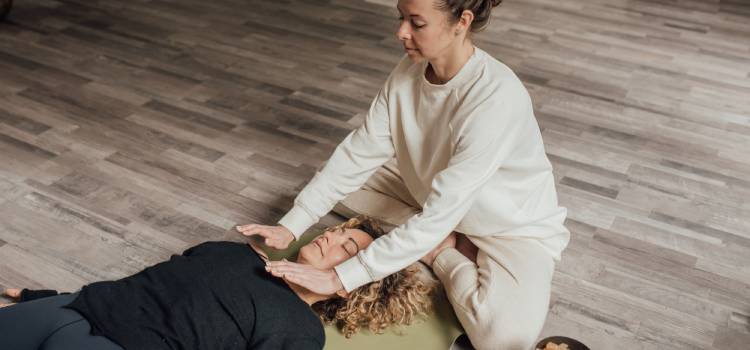
To be a successful Reiki healer, one must earn trust and network within the Reiki, massage, and alternative therapy communities. Building a clientele with trusted individuals can help you grow your career.
Self-promotion, or grassroots promotion, is extremely common as well in landing Reiki work. Many practitioners utilize social media and the relationships they have built-in Reiki training to grow their clientele. With a large enough clientele, a practitioner can potentially practice full-time.
It is a personal decision to start practicing and pursuing a Reiki job, and it depends largely on a practitioner’s mastery of the techniques he or she learned during training as well as the size of his or her network and clientele.
Some of the previously mentioned health benefits of Reiki that have been reported with this type of treatment include:
Many of the beneficial effects of Reiki therapy are subjective due to the different ailments and energy levels each person possesses. However, studies show that Reiki treatment, specifically in palliative care, may create feelings of:
Further positive reports of Reiki therapy, and its impact on overall human health, include client testimony that describes a spectrum of positive effects. These positive gains vary from a boost in overall immunity to an increase in meditative mental control, promotion of tissue growth as well as other expedited healing and recovery times.
Is Reiki a massage? Not exactly. But there is a hybrid treatment, known as Reiki massage that fuses the two therapies. Reiki is inherently different than many forms of massage therapy or alternative therapy due to the hand-off nature of its practice. It focuses on meditative balance, anxiety reduction, and total energy balance through soft touch or palm hovering.
This approach differs from massage therapy, as Reiki can but does not typically involve direct physical manipulation through heavy touch. Instead, a Reiki therapist’s hands may only hover (or lightly touch) above an ailing body part to promote energy flow and healing. Practitioners may also use the flow of their personal energy to add to a misbalance or void they see within their clients.
Many traditional forms of therapy rely on medical tests and data, but Reiki therapy does not. Reiki therapists utilize a client’s medical history as an alternative source of information. But ultimately, a Reiki master uses their own reading of energy from the client to develop an approach to therapy. Reiki differentiates from many medical treatments or therapies as it always requires a unique approach to each different client.
Reiki, unlike traditional massage therapy, is not licensed by a state board. Traditional massage therapy requires practitioners to attend an accredited massage school. Many massage schools have a curriculum that revolves around topics such as anatomy, physiology, and related fields of study.
In the majority of states in the U.S., you must pass a state board exam after graduating from your chosen massage school. These massage programs vary in terms of cost and time. Therefore it’s important to research and find the most cost-effective and high-quality school that meets your needs.
However, there are different organizations that have raised the standards and requirements of practicing Reiki. One such organization, The Reiki Licensing Commission for Reiki Masters and Healers (RLCRMH), offers various Reiki certifications and awards designations for Reiki healers, coaches, masters, and instructors. Some of the most popular ones include:
Certain Reiki masters have their own form of Reiki with unique standards and requirements. For example, to practice Usui Reiki you must study under a teacher who comes from direct lineage connected to Dr. Usui or his Hawaiian master student, Hawayo Takato.
Typical Reiki therapy sessions last between 30 minutes and two hours. However, some practitioners may utilize shorter or longer sessions depending on what they believe their client needs.
Generally, a client will lay (clothed) upon a massage table. A Reiki therapist then utilizes their palms and hand placement to stimulate positive energy flow and overall balance. Note that Reiki does not rely on physical manipulation and massage. Instead, Reiki focuses on the feeling of energy rather than the application of direct touch and muscle manipulation.
Clients often report a sense of heat, weight, or tingles in response to the change in energy caused by their therapist. Some clients report no feeling or physical change whatsoever. These clients often reflect on their positive changes after the therapy session rather than feeling immediate relief during the session.
You may find yourself feeling a heightened sense of relaxation during your Reiki therapy session. Many Reiki therapists report their clients dozing off due to reaching a higher level of meditative calmness.
Reiki therapy is offered at hundreds of hospitals and associated organizations worldwide. In addition, throughout Europe, some medical agencies offer this type of treatment free of charge due to its classification as palliative care. More often than not, Reiki treatment is not covered by insurance due to its “alternative” classification.
Clients should keenly research their potential Reiki practitioner. Because there are minimal regulations within the field, it’s important that seekers of this therapy pay close attention to the credentials and experience of potential therapists. Finding a high-quality Reiki practitioner may be challenging for many clients, as this is an extremely personal therapeutic process.
Many holistic health practitioners combine Reiki with other disciplines, such as massage therapy and acupuncture.
Therefore, depending on what you offer in your practice, the amount you can earn varies greatly. Here are some factors that can influence your Reiki master salary:
The U.S. Bureau of Labor Statistics doesn’t specifically track Reiki practitioner salaries, but they do provide salary and job growth information for massage therapists and acupuncturists.
Many licensed massage therapists incorporate Reiki into their healing, and their salaries can vary in range depending on whether they work full- or part-time, and where their practice is located.
According to the U.S. Bureau of Labor and Statistics, not school-specific information, the median hourly rate for massage therapists (the closest officially tracked field to Reiki) is $28, with some earning more and some earning less. Reiki Masters may have more income potential through teaching and lecturing.
With the emerging field of energy medicine, Reiki is enjoying increasing popularity as a form of treatment, as well as a field of practice for practitioners and Reiki masters.
Many practitioners start their Reiki career with their own private practice, while others add it to their existing massage therapist duties, acupuncture practices, nursing, and chiropractic practice.
As the health industry grows and there is more demand for natural healing and practices that promote well-being and stress relief, Reiki may be a good option to consider, out of the popular healing arts—and a respected certification may add to your natural health qualifications.
If you’ve ever had a great massage, you understand how you can feel both relaxed and invigorated at the same time. This seeming dichotomy of emotions allows you this feeling of well-being because a massage loosens muscles, increases oxygen and blood flow throughout the body, and encourages the free flow of the body’s own energies, or “Chi.” This chi is the fundamental focus of Reiki training.
Although the certification standards are more rigorous and there are more licensing laws surrounding massage therapy schools, Reiki training is increasing in demand, and with the growth in the healing arts and natural health degree field, training in Reiki healing can be a complementary addition to your massage therapy practice.