
By: Kendall Upton
Updated: January 29, 2026

By: Kendall Upton
Updated: January 29, 2026
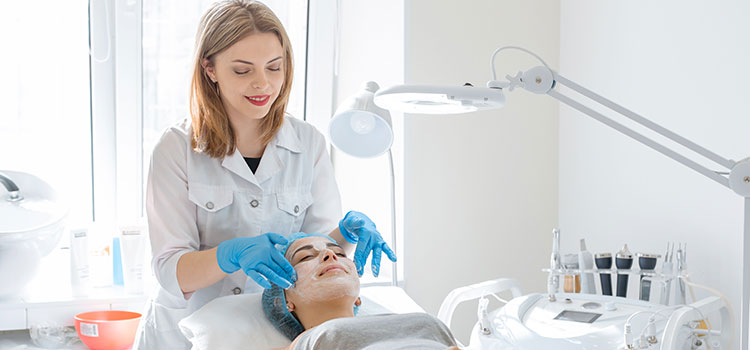
Even though they may only be providing superficial skincare treatments to clients, estheticians and other cosmetology professionals need a license in order to practice. This protects clients by ensuring that estheticians have completed minimum educational and other professional standards before providing client care.
All 50 states require estheticians to have a license, but each state’s requirements for licensure can be a little different. If you’re thinking about starting a career as an esthetician, it’s imperative that you research and understand what’s required where you live and work so you can follow the necessary steps to get your career started strong.
In This Article
We’ve compiled the basic esthetician licensing requirements for all 50 states below including minimum education and exam requirements. In addition to the exam types listed below, keep in mind that some states also require applicants to pass a laws and rules exam.
State regulations often change and reciprocity requires additional steps—always check with your state’s licensing board directly to find out everything you need to do to obtain an esthetician license.
Search esthetician licensing requirements by state
Licensing agency: Alabama Board of Cosmetology
Prerequisites: At least 16 years old; 10th grade education
Education and Training: 1,000 hours or 2,000 for apprenticeships
Exams: Written and practical exams
Continuing education requirements: None
Licensing agency: Alaska Board of Barbers and Hairdressers
Prerequisites: At least 16 years old; two years of high school education
Education and training: 480 hours (education or apprenticeship)
Exams: Written and practical exams
Continuing education requirements: None
Licensing agency: Arizona Barbering and Cosmetology
Prerequisites: At least 18 years old, or 16 with at least two years of high school education
Education and training: 600 hours or an approved apprenticeship program
Exams:Written and practical exams
Continuing education requirements: None
Licensing agency: Arkansas Department of Health
Prerequisites: At least 16 years old; high school diploma or equivalent
Education and training: 600 hours
Exams: Written and practical exams
Continuing education requirements: None
Licensing agency: California Board of Barbering & Cosmetology
Prerequisites: At least 17 years old; 10th grade education
Education and training: 600 hours
Exams: Written exam only
Continuing education requirements: None
Licensing agency: Colorado Office of Barber & Cosmetology Licensure
Prerequisites: At least 16 years old; high school education not required
Education and training: 600 hours
Exams: Written and practical exams
Continuing education requirements: None
Licensing agency: Connecticut State Department of Public Health
Prerequisites: None
Education and training: 600 hours
Exams: None required
Continuing education requirements: None
Licensing agency: Delaware Board of Cosmetology and Barbering
Prerequisites: 10th grade education
Education and training: 600 hours or 1,200 hours for apprenticeships
Exams: Written and practical exams
Continuing education requirements: None
Licensing agency: Board of Barber and Cosmetology
Prerequisites: At least 18 years old; 10th grade education
Education and training: 600 hours or 1,200 hours for apprenticeships
Exams: Written and practical exams
Continuing education requirements: 6 hours of CE every two years
Licensing agency: Florida Board of Cosmetology
Prerequisites: At least 16 years old; high school diploma or equivalent
Education and training: 1,200 hours for cosmetologists, 260 for facial specialists
Exams: Written exam
Continuing education requirements: 10 hours of CE every two years
Licensing agency: Georgia State Board of Cosmetology and Barbers
Prerequisites: At least 17 years old; high school diploma or equivalent
Education and training: 1,000 hours or 2,000 for apprenticeships
Exams: Written and practical exams
Continuing education requirements: 5 Continuing Education Units (CEUs) every two years
Licensing agency: Hawaii Board of Barbering and Cosmetology
Prerequisites: At least 16 years old; high school diploma or equivalent
Education and training: 600 hours or 1,200 for apprenticeships
Exams: Written exam
Continuing education requirements: None
Licensing agency: Idaho Barber and Cosmetology Services Licensing Board
Prerequisites: At least 16 and a half years old; 10th grade education
Education and training: 600 hours or 1,200 for apprenticeships
Exams: Written and practical exams
Continuing education requirements: None
Licensing agency: Illinois Department of Financial and Professional Regulation
Prerequisites: At least 16 years old; high school diploma or equivalent
Education and training: 750 hours
Exams: Written and practical exams
Continuing education requirements: 10 hours of CE every two years
Licensing agency: Indiana Cosmetology & Barbers Board
Prerequisites: At least 17 years old; 10th grade education
Education and training: 700 hours
Exams: Written and practical exams
Continuing education requirements: None
Licensing agency: Iowa Department of Inspections, Appeals, & Licensing
Prerequisites: High school diploma or equivalent
Education and training: 600 hours
Exams: Written exam
Continuing education requirements: 6 hours of CE every two years
Licensing agency: Kansas Board of Cosmetology
Prerequisites: At least 17 years old; high school diploma or equivalent
Education and training: 1,000 hours
Exams: Written and practical exams
Continuing education requirements: None
Licensing agency: Kentucky Board of Cosmetology
Prerequisites: At least 18 years old; high school diploma or equivalent
Education and training: 750 hours
Exams: Written and practical exams
Continuing education requirements: None
Licensing agency: Louisiana Board of Cosmetology
Prerequisites: At least 16 years old; 10th grade education
Education and training: 750 hours
Exams: Written and practical exams
Continuing education requirements: None
Board: Office of Professional and Occupational Regulation–Barbering and Cosmetology Licensing
Prerequisites: No age or minimum high school education requirements
Education and training: 600 hours or 1,000 hours for apprenticeships
Exams: Written and practical exams
Continuing education requirements: None
Licensing agency: Maryland Board of Cosmetologists
Prerequisites: At least 17 years old; 9th grade education
Education and training: 600 hours or a 12-month apprenticeship
Exams: Written and practical exams
Continuing education requirements: None
Licensing agency: Board of Registration of Cosmetology and Barbering
Prerequisites: None
Education and training: 600 hours
Exams: Written and practical exams
Continuing education requirements: None
Licensing agency: Michigan Board of Cosmetology
Prerequisites: At least 17 years old; 9th grade education
Education and training: 400 hours or six-month apprenticeship
Exams: Written and practical exams
Continuing education requirements: None
Licensing agency: Minnesota Board of Cosmetology
Prerequisites: At least 17 years old
Education and training: 600 hours
Exams: Written and practical exams
Continuing education requirements: None
Licensing agency: Mississippi State Board of Cosmetology
Prerequisites: At least 17 years old; high school diploma or equivalent
Education and training: 600 hours
Exams: Written and practical exams
Continuing education requirements: None
Licensing agency: Board of Cosmetology and Barber Examiners
Prerequisites: At least 17 years old; 10th grade education
Education and training: 750 hours or 1,500 for apprenticeships
Exams: Written and practical exams
Continuing education requirements: None
Licensing agency: Montana Board of Barbers and Cosmetologists
Prerequisites: At least 18 years old; high school diploma or equivalent
Education and training: 650 hours
Exams: Written and practical exams
Continuing education requirements: None
Licensing agency: Department of Health and Human Services–Cosmetology and Esthetics
Prerequisites: At least 17 years old; high school diploma or equivalent
Education and training: 600 hours
Exams: Written exam
Continuing education requirements: 8 hours of CE every two years
Licensing agency: Nevada State Board of Cosmetology
Prerequisites: At least 18 years old; 10th grade education
Education and training: 600 hours or 1,200 for apprenticeships
Exams: Written and practical exams
Continuing education requirements: None
Licensing agency: Board of Barbering, Cosmetology and Esthetics
Prerequisites: High school diploma or equivalent
Education and training: 600 hours
Exams: Written and practical exams
Continuing education requirements: none
Licensing agency: New Jersey State Board of Cosmetology and Hairstyling
Prerequisites: At least 17 years old; high school diploma or equivalent
Education and training: 600 hours
Exams: Written and practical exams
Continuing education requirements: None
Licensing agency: Board of Barbers and Cosmetologists
Prerequisites: At least 17 years old
Education and training: 600 hours
Exams: Written and practical exams
Continuing education requirements: None
Licensing agency: New York Department of State Licensing
Prerequisites: At least 17 years old
Education and training: 600 hours
Exams: Written and practical exams
Continuing education requirements: None
Licensing agency: North Carolina Board of Cosmetic Art Examiners
Prerequisites: None
Education and training: 600 hours
Exams: Written and practical exams
Continuing education requirements: 8 hours of CE per year
Licensing agency: North Dakota State Board of Cosmetology
Prerequisites: High school diploma or equivalent
Education and training: 600 hours
Exams: Written and practical exams
Continuing education requirements: None
Licensing agency: Ohio State Cosmetology and Barber Board
Prerequisites: At least 16 years old; 10th grade education
Education and training: 600 hours
Exams: Written and practical exams
Continuing education requirements: 4 hours of CE every two years
Licensing agency: Oklahoma State Board of Cosmetology and Barbering
Prerequisites: At least 16 years old; high school diploma or equivalent
Education and training: 600 hours or 1,200 for apprenticeships
Exams: Written and practical exams
Continuing education requirements: None
Licensing agency: Oregon Board of Cosmetology
Prerequisites: None
Education and training: 444 hours plus 20 hours of Oregon laws and rules and 20 hours of career development
Exams: Written and practical exams
Continuing education requirements: None
Licensing agency: State Board of Cosmetology
Prerequisites: A least 16 years old; 10th grade education (unless over 35 years old or a veteran)
Education and training: 300 hours
Exams: Combined theory and procedural exam
Continuing education requirements: None
Licensing agency: Rhode Island Board of Hairdressing and Barbering
Prerequisites: At least 18 years old; high school diploma or equivalent OR 25 years of experience
Education and training: 600 hours
Exams: Written and practical exams
Continuing education requirements: None
Licensing agency: South Carolina Board of Cosmetology
Prerequisites: At least 16 years old; 10th grade education
Education and training: 450 hours
Exams: Written and practical exams
Continuing education requirements: 4 hours of CE every two years
Licensing agency: South Dakota Cosmetology Commission
Prerequisites: Be at least 18 years old
Education and training: 600 hours
Exams: Written and practical exams
Continuing education requirements: None
Licensing agency: Board of Cosmetology and Barber Examiners
Prerequisites: At least 16 years old; 10th grade education
Education and training: 750 hours
Exams: Written and practical exams
Continuing education requirements: None
Licensing agency: Texas Department of Licensing and Regulation–Barbering and Cosmetology
Prerequisites: At least 17 years old; high school diploma or equivalent
Education and training: 750 hours
Exams: Written and practical exams
Continuing education requirements: 4 hours of CE every two years
Licensing agency: Cosmetology and Associated Professions Licensing Board
Prerequisites: No age or minimum high school education requirements
Education and training: 600 hours or 800 for apprenticeships
Exams: Written and practical exams
Continuing education requirements: None
Licensing agency: Vermont Office of Professional Regulation: Barbers & Cosmetologists
Prerequisites: High school diploma or equivalent
Education and training: 500 hours or 750 for apprenticeships
Exams: Written and practical exams
Continuing education requirements: None
Licensing agency: Board for Barbers and Cosmetology
Prerequisites: No age or minimum high school education requirements
Education and training: 600 hours or 2,000 for apprenticeships
Exams: Written and practical exams
Continuing education requirements: None
Licensing agency: Washington State Department of Licensing–Cosmetology Program
Prerequisites: At least 17 years old
Education and training: 750 hours or 2,000 for apprenticeships
Exams: Written and practical exams
Continuing education requirements: None
Licensing agency: West Virginia State Board of Barbers and Cosmetologists
Prerequisites: At least 18 years old; high school diploma or equivalent
Education and training: 600 hours
Exams: Written and practical exams
Continuing education requirements: None
Licensing agency: Department of Safety and Professional Services
Prerequisites: High school diploma or equivalent
Education and training: 450 hours
Exams: Written and practical exams
Continuing education requirements: None
Licensing agency: Wyoming Board of Cosmetology
Prerequisites: At least 16 years old; 10th grade education
Education and training: 600 hours
Exams: Written and practical exams
Continuing education requirements: None
All estheticians need a license before they can offer services to clients. Licenses are issued by states, often through a state’s board of cosmetology.
The only real consistent licensing requirement for estheticians in all states is that they must complete training through an approved education program. From there, the requirements diverge quite a bit.
For starters, the number of hours of education needed to qualify for licensure ranges from about 300 in some states to 1,000 or more in others, with most states requiring about 600 hours of education. Some states also allow approved apprenticeships in lieu of a formal education program, but these typically must last longer. For example, Washington state requires estheticians to complete an education program of at least 750 hours, but that number jumps to 2,000 hours if they choose to do an apprenticeship instead.
Other common licensing requirements that you might expect to be ubiquitous are not always so—for example, some states have minimum age requirements (usually at least 16 or 17 years old) and others do not. Some states require licensed estheticians to have a high school education or GED, while others don’t have these kinds of prerequisites. These are just another example of the importance of researching your state’s laws if you want to become a licensed esthetician.
After completing their education, almost all states require estheticians to take and pass a written and practical exam. A few states only require the written exam.
Most states use the esthetics exams from the National Interstate Council of State Boards of Cosmetology (NIC) which develops written theory exams and practical exams for many different cosmetology professions. The NIC’s administers practical exams in both hands-on and written formats.
Some states also require applicants to pass a state-specific laws and rules exam.
A handful of states—District of Columbia (D.C.), Minnesota, Nevada, Oregon, Utah, Virginia and Washington—offer additional licensing tiers for estheticians. This higher tier of license, often called a master or advanced esthetician license, is obtained through more hours of education and work experience. In several cases, master or advanced estheticians have a broader scope of practice due to their additional training. If you live in one of these states, check with your licensing board directly to find out how to qualify. Getting a higher-level license could increase your job prospects and earning potential.
Some esthetician roles may be called medical estheticians, but this title can be misleading. In reality, there is no such thing as a medical esthetician because there are no states which offer a license for this kind of professional. Although some estheticians may work in a medical practice, calling themselves a medical esthetician has no bearing on what types of procedures they can perform.
Most states do not require estheticians to complete continuing education (CE) to maintain their license. A little less than a third of states have CE requirements, meaning these estheticians must complete a certain number of CE hours or continuing education units (CEUs) each license renewal cycle. Attending classes, webinars, conferences and other events are common ways for most people to earn CE hours.
Keep in mind that you must complete continuing education if you choose to pursue the esthetician certification from the National Coalition of Estheticians Association (NCEA). As a result of the lack of CE requirements for licensure, the NCEA developed CE requirements for their credential holders to try to raise the standards of practice in the hopes that licensure standards may eventually follow their lead.
There are several different esthetic and skincare certifications that are available to licensed estheticians and cosmetologists. Professional certifications are a way to demonstrate your commitment to your profession and the skills you’ve acquired. Having a certification, therefore, could make you a more competitive job candidate and attract more clientele, which could in turn lead to a higher earning potential. Most certifications require you to pass an exam administered by a professional organization in order to get certified.
Estheticians can obtain various skincare and esthetic certifications through organizations like CIDESCO, but the National Coalition of Estheticians Association (NCEA) offers the leading esthetician certification nationwide. Becoming NCEA Certified is a voluntary, national credential open to estheticians after initial licensure.
In order to qualify for the NCEA exam, you must be able to provide proof of the following:
After you submit an application, you’ll receive a study manual once your application is processed.
Passing their exam grants you your certification. In order to maintain your NCEA certification, you have to recertify every four years by completing 12 CEUs each cycle.
In order to maintain your NCEA certification, you have to recertify every four years by completing 12 CEUs each cycle.
You must recertify a total of three times (12 years total) before you can earn a lifetime certification, after which you no longer must complete CEUs to maintain your certification.
You need an esthetician license issued by any state you intend to work in—getting licensed once does not automatically permit you to work across state lines. If you decide to move or if you work along a state border (and therefore may be providing services in more than one state), you must apply for a reciprocal license, also referred to as a license through endorsement.
Generally, you’ll submit an application for licensure through the state’s cosmetology board and provide evidence of any current license(s) you hold. The board then compares the licensure requirements of that state to their own to determine whether you meet their standards. Some states want to make sure you completed the same number of hours of education, others may simply require that you have had an active license elsewhere for a certain number of years.
If you’re thinking of embarking on a career as a skincare specialist, you need an esthetician license to practice in all 50 states. Licensure begins with proper education, with most states requiring that you complete an esthetician or cosmetology program of at least 600 hours to qualify. After that, you need to pass your state’s licensing exams. From there, estheticians have the option to pursue voluntary credentials through professional organizations like the NCEA.