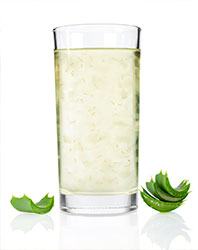
Aloe vera is a potently powerful plant that humans have utilized for thousands of years. Although you may recognize it as a common ingredient in lotions and other skincare products, that only scratches the surface of aloe vera’s many uses and health benefits.
We won’t beat around the aloe bush: Fresh is best. Not everyone has access to fresh aloe leaves, however, and there are plenty of alternative products that you can find at your local health food store. No matter what form of aloe vera you use, there are many different products and variations that you can make right in your own home.
Before aloe gel and juice can hit store shelves, it has to be properly harvested and undergo a highly-sanitized production process.
Aloe farms can be found throughout the world. Africa, Australia, Asia, Central America, South America and the Caribbean are all popular locations for growing aloe for commercial use. Perhaps because aloe has been recognized as big business by many, farms in other countries are cropping up. The International Aloe Science Council states that commercial operations have requested set-up help in Greece, Iran and other countries in the Middle East.
Cultivation
To grow strong aloe plants, farms need good irrigation systems, fertilization and the proper climate. Since aloe is resistant to insects and disease, there’s no need for pesticides.
Did you know? There are no aloe vera seeds, only pups. To grow a new aloe plant, simply cut offshoots of a mature plant (roots and all) and replant.
Harvesting
While cutting and gathering aloe leaves may seem like a simple task, there’s a science behind it. If cut improperly, aloe loses its potency quickly and becomes susceptible to contamination. Farm employees harvest the largest (and most mature) leaves which are found at the bottom of the plant. Some aloe plants yield three leaves at a time, while others can produce six to nine leaves at harvest time.
How aloe is cut:
The leaf is pulled away from the stalk and cut at the white base of the plant. Doing this prevents the inner part of the leaf from being exposed to outside elements. Cutting at the base keeps leaves sealed.
Upon harvesting, the leaves are gathered and delivered to a highly-regulated and sanitized processing facility.
Did you know? Aloe leaves can be harvested three to five times a year.
Processing
Processing must be done carefully to prevent the outer rind from being punctured which can cause contamination.
The first step in processing is washing the leaves using various machines. Post-wash, the processing steps differ depending on whether the whole leaf or inner leaf will be used.
If only gel is being used, the inner contents need to be separated from the rind and latex. The bottom of the leaf is cut and the yellow latex seeps out. The leaf is then rinsed to ensure no latex is present. The gel is then removed.
If the entire leaf is used, an extra step is taken to filter out the latex portion of the leaf.
Did you know? For the best quality aloe product, cutting and processing must be done within 48 hours.
Pasteurization
Aloe goes through a pasteurization process to ensure the product is safe. Manufacturers heat the aloe at a high temperature for a short amount of time.
Once these steps are completed, the aloe is concentrated.
Did you know? Aloe vera gel and orange juice have something in common. Both products are sold “with pulp” and “pulp-free.”
Types of aloe vera
Aloe has turned into a multi-billion dollar industry as more research hints at the plant’s health benefits. Many supermarkets and health food stores carry aloe vera juices, gels and powders, but make sure you understand exactly what you’re purchasing.
Aloe vera juice
Defined as aloe vera leaf juice, commercial aloe juice is made by crushing or grinding entire leaves, including the latex portion. Because the latex has a bitter flavor and laxative effects, it is removed during processing using a stripping agent. The NIH warns that this method can result in an aloe product with very few active ingredients, such as Acemannan. Look for juices that are more than 99% aloe.
If you opt for the juice, be sure you’re purchasing a product from a reputable company. If the latex isn’t removed during processing, there can be serious side effects. Since supplements aren’t regulated by the federal government, it can be risky to use a whole-leaf product.
The benefit to using this form of aloe vera?
“The juice is easy to take internally,” said Kelly Morrow, MS, RDN, FAND, a faculty member in the Department of Nutrition and Exercise Science at Bastyr University in Washington. She does caution against using whole-leaf aloe.
What to Know About Aloe Latex
Although aloe vera is a natural remedy, take precautions before using it. The National Library of Medicine recommends avoiding aloe latex because of serious side effects such as stomach cramping, kidney problems, heart disturbances, muscle weakness and blood in the urine.
Years ago, many companies used aloin (the substance that causes the laxative effect) in their laxative products, but the FDA stepped in and prohibited the use of the substance. The federal agency was concerned people would begin increasing their aloe latex dosage because the body builds up a tolerance and higher dosages could lead to the aforementioned health problems.
Aloe vera gel
Defined as aloe vera inner leaf juice, or inner fillet. Commercial aloe vera gel is made without the outer rind and aloe latex. It’s then ground into juice or kept in gel form. Some products use carrageenan, an element in seaweed, as a thickening agent. The problem? Carrageenan has been linked to digestive problems which is a bit ironic since aloe gel is often used to aid in digestion.
“Gel and juice are largely similar,” Morrow noted, but said the main difference is the amount of mucilage in each. There is more present in gel.
Mucilage is a viscous liquid that contains the polysaccharides that make aloe so healthful.
Cold-pressed aloe
It’s hard to escape the cold-pressed juice trend and many aloe manufacturers use this method in their juice and gel production.
While the practice usually means a heftier price tag, there’s good reason to buy cold-pressed.
When juice is made the traditional way—fruits and vegetables are torn and shredded by blades—some heating occurs. This reduces the amount of nutrients in the juice, much like cooking can decrease the nutritional value of food. Exposure to air causes the same effect.
Cold-pressing involves, well, pressing the juice out of vegetables and fruits, but no heat is present in this process. The result is a thicker product with more vitamins and minerals.
With aloe vera, the cold-pressing occurs after the inner leaf gel has been removed. It’s then pressed and ground.
Organic aloe vera
Unlike other many other plants, aloe vera is resistant to most pests due to its thick outer later. This means there’s rarely a need to spray pesticides on the plant. The International Aloe Science Council states that in just about all cases, aloe vera is grown organically. The organization discourages commercial growers from using pesticides, germicides and herbicides.
Morrow pointed out that the use of these chemicals can irritate tissues.
To be certified by the National Organic Program (USDA Organic), growers and handlers must provide a large portfolio of information including the history of the substances used on the land in the last three years. They’re required to show a plan detailing which practices are used in aloe production and how this plan is monitored. Growers and handlers must also demonstrate how they prevent organic aloe from coming into contact with non-organic materials. The USDA conducts yearly inspections.
Other aloe vera forms
Aloe vera concentrate
Commonly made from the whole aloe leaf. Because it’s more potent, it’s used by people who want to take a small dose once a day. Used: Alone or with food/drink.
Aloe vera powder
The aloe vera gel is rinsed to remove remnants of aloin (the laxative ingredient in the latex) and dehydrated. The dried gel is then ground into powder form. Use in: Food and beverages.
Aloe vera capsules
Often made from the whole leaf and freeze-dried into capsule form. This offers a more concentrated form of aloe vera. Benefits: Doesn’t need to be refrigerated and travel-friendly.
“>
Tips for purchasing aloe products
With so many aloe products on the market, it can be difficult to know which one to choose. Morrow said to think about these issues:
Is the company reputable?
Was it imported from another country?
Are you purchasing it off the internet?
The main point is to do your research. This isn’t to say aloe juice or gel is inherently bad if it’s imported from another country. The problem lies with not knowing how stringent other countries’ standards are and whether a product is primarily aloe. Morrow suggested checking reviews about supplements at ConsumerLabs.com.
The International Aloe Science Council defines what is considered aloe vera in commercial products:
“Only products containing Acemannan, or the beta 1-4 acetylated glucomannans, can be accurately labeled as aloe vera.”
If you’re removing a leaf from a plant (instead of purchasing in a store), be sure to cut an outer leaf near the base of the plant.
1. Slice off the prickly sides of the leaf with a knife. Take care not to cut too much off.
2. With the convex side up, use a vegetable peeler to trim the outer layer of the leaf.
3. Slide the knife under the gel to remove it from the other side of the leaf.
4. Dice the gel into smaller pieces.
5. Refrigerate leftover aloe. It lasts about a week.
Caution: Be careful not to use the yellow juice from the leaf. It has a laxative effect.
What you can do with aloe vera
Aloe vera may turn out to be more than just a superfood and skin and hair treatment. It can be used for other daily tasks, like brushing your teeth and keeping food fresh. Here are 10 things you can do with aloe vera.
1. Toothpaste and mouthwash
Aloe vera gel contains antiseptic properties which can help clean teeth and gums. Since it doesn’t contain harsh ingredients, the soothing gel may be a better option for people with sensitive teeth. The NIH also states the ingredient can help reduce inflammation of the gums caused by gingivitis or periodontitis.
2. Food preservative
Back in 2005, researchers in Spain found that adding an aloe vera coating to fruits and vegetables may help them last longer. In 2014, researchers tested the effectiveness of aloe vera as a coating on tomatoes.
The results showed that aloe vera prevented parasitic and fungus growth on the tomatoes. The quality of the fruit was maintained but the aloe coating did delay ripening.
3. Shaving gel
Aloe’s moisturizing qualities make for a natural and refreshing shave gel. It also helps prevent razor burn and soothes cuts. Mix one part olive oil and three parts pure aloe vera to make your own concoction.
4. Body/face mist
Aloe gel has a cooling effect. With a few ingredients, you can make a refreshing spritz for the body and face. Here’s a recipe from MindBodyGreen.
Cucumber-aloe hydrating mist
Ingredients:
1 small cucumber
1/3 cup of distilled water
1 tsp. aloe vera
1 tsp. witch hazel
Instructions:
Peel and cut the cucumber (either dice it or put into a food processor). If using a processor, strain through a cheesecloth to extract the cucumber essence and to keep the mist light. Include some of the diced pieces in the mix. Pour into a glass spray bottle with the water, aloe vera, witch hazel and shake.
5. Fight dandruff
There are plenty of reasons aloe vera can fight dandruff. Sure, it moisturizes, but the compounds in the gel also fight bacteria and fungus that cause the flaky stuff. You can find natural aloe vera shampoos that are free of chemicals or you can make your own.
6. Ice cubes
Aloe not cooling enough for you? Make ice cubes! You can either cut fresh gel into 2-inch pieces and freeze or place the gel in ice cube trays. Once frozen, you can use them for sunburns and other topical needs.
7. Hand sanitizer
Homemade hand sanitizer using aloe has become popular among natural health proponents. Some recipes call for rubbing alcohol while others use a mix of essential oils and witch hazel, along with aloe. Tea tree oil has antibacterial qualities and can work well with the hydrating effects of aloe.
8. Skin salves
Salves offer relief to dry, cracked skin and also work as a layer of protection, plus they’re easy to make at home.
Aloe is a common ingredient in salves due to its anti-inflammatory and cooling abilities. It acts as a lightener and allows the salve to glide across the skin easily.
To make an aloe salve, you’ll need the gel from one to three aloe leaves:
Infuse olive oil with herbs of your choice (try rosemary and calendula flowers) in a crockpot on low for three hours. Be sure all the water from the herbs cooks away otherwise mold can occur.
Strain the herbs and collect as much of the olive oil as possible.
Add the olive oil to the aloe vera gel and mix.
For two parts olive oil, you’ll need one part beeswax. Add the wax.
Sit the bowl containing the mixture above a simmering pot of water.
Once the mixture has melted completely, it can be poured into a container to cool.
9. Face scrub
Aloe vera has antibacterial and antifungal properties making it a natural cleanser. Combine it with ingredients from the kitchen, like oatmeal or baking soda, to make an exfoliating face scrub.
10. Aloe vera oil
Used for skin care needs, mix aloe vera gel with coconut oil and heat on low in a pot for about 10 minutes. The oil is great for post-shower moisturizing.
Aloe vera recipes
If you’re new to eating aloe, try these quick and simple recipes to get you started.
Add the coconut water, aloe vera, cucumbers and apples to the carafe of a blender and puree until smooth. Strain if desired. Serve immediately over ice.