
By: Natural Healers Staff
Updated: January 26, 2026

Physical Therapy Degree and Career Guide
Physical Therapist Salary by State
By: Natural Healers Staff
Updated: January 26, 2026
Physical therapists in Utah, like other states, must adhere to state laws and regulations governing their profession. Here’s what they can earn once they enter the field.

Utah offers a promising environment for physical therapists, with competitive salaries, a growing healthcare industry and a unique outdoor culture. Physical therapists in Utah can find diverse opportunities across various settings, from hospitals and clinics to sports and specialized fields. The state’s lower cost of living and high quality of life make it an attractive place for PTs to practice and thrive in their careers.
In this Article
There are 2,310 people employed as physical therapists in Utah says the U.S. Bureau of Labor Statistics (BLS). This translates to 1.3 people working in the profession per every 1,000 people living in the state. The median wage per hour is $48 and the forecasted job growth for the coming decade is 11.9%.
Utah is home to professional sports teams like the Utah Jazz (NBA) and Real Salt Lake (MLS). These teams employ physical therapists to help players recover from injuries, improve performance, and maintain optimal physical condition. PTs in these roles often work closely with athletic trainers, team physicians and other healthcare professionals to ensure athletes’ health and performance. In addition to sports physical therapy roles, Utah has unique jobs that require PT skills:
Here are some top employers of physical therapists in Utah and how they use PT talent and skills:
Utah provides several compelling reasons why it’s an attractive state for physical therapists.
Utah provides several compelling reasons why it’s an attractive state for physical therapists:
Physical therapists in Utah work in diverse settings, providing essential services in healthcare, sports and rehabilitation:

According to data from the U.S. Bureau of Labor Statistics (BLS), the median annual salary for physical therapists in Utah is around $99,880, with more or less earnings depending on location, experience and specialization. Entry-level physical therapists may earn less, while experienced practitioners in high-demand areas can earn significantly more.
Compare Utah’s median annual PT salary with the median national salary for physical therapists—which is is $102,760 a year—and you can see Utah PTs earn around $4,000 less than the national median.
10%$66,160
25%$80,870
50%$99,880Median
75%$109,480
90%$136,970
Median Hourly Wage$48
Job growth11.9%
Total Employment2,300
| Metro area | Median Salary | Bottom 10% | Top 10% |
|---|---|---|---|
| Salt Lake City-Murray, UT | $103,840 | $62,090 | $135,960 |
| St. George, UT | $99,340 | $58,220 | $150,480 |
| Ogden, UT | $99,170 | $74,670 | $136,250 |
| Logan, UT-ID | $97,830 | $57,570 | $133,470 |
| Provo-Orem-Lehi, UT | $96,960 | $65,140 | $136,900 |
Source: U.S. Bureau of Labor Statistics (BLS) 2025 median salary; projected job growth through 2035. Actual salaries vary depending on location, level of education, years of experience, work environment, and other factors. Salaries may differ even more for those who are self-employed or work part time.
Take a look at how salaries compare for fields that are similar to physical therapists:
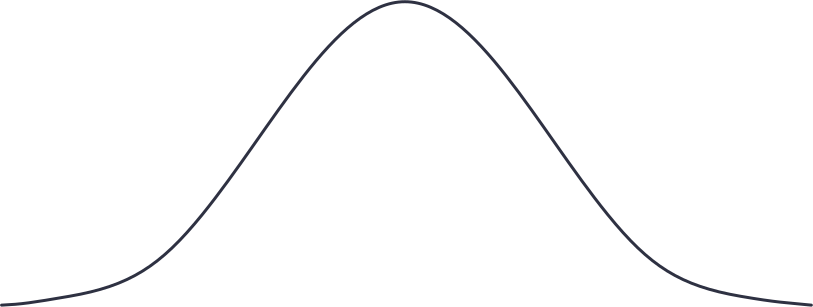
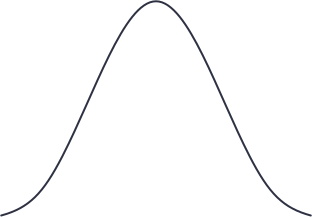
The salary range for PT professionals in Utah typically spans from $66,160 for the lowest 10% in the field to $136,970 for the highest 10% in the field per year. This accounts for entry-level positions to senior-level roles and takes into consideration the other factors such as experience, education and time in the position.
Your earning level may depend upon where you live within a state. For example, cities tend to pay better than rural or less populated areas. If your city is an industry hub, say for example you work in business and you live in a city that has several high profile corporate businesses or healthcare industries, pay may be more competitive. For example, median pay in Salt Lake City and Logan is above the state’s median, at $95,970 and $101,960 respectively. Provo is also higher, at $97,730 and Ogden is lower, at $94,260. That said, here’s what the BLS reports as highest paying cities in the U.S.
As you can see, Utah does not have any metro areas that rank in the top 10 of highest paying cities.
The job growth outlook for physical therapists in Utah is generally positive, reflecting a national trend toward increasing demand for healthcare professionals. Several factors contribute to the positive outlook for PT job growth in Utah, including an aging population, an active outdoor culture, the state’s emphasis on preventive care and opportunities for PTs to specialize.
With the BLS saying the demand for physical therapists is projected to grow significantly, Utah capitalizes on this trend due to the state’s expanding healthcare industry, growing population and active lifestyle. Overall, PTs in Utah can expect a positive job growth outlook with a wide range of opportunities in various settings and specializations.
The salary for physical therapists in Utah is influenced by various factors, including experience, education, work setting, location, employer type, specialization, demand and compensation packages. Take a look:
To determine if you’re being paid fairly as a physical therapist in Utah, consider industry salary averages, location, work setting, experience, education, employer compensation packages, networking opportunities and job market trends.
By comparing your salary and benefits with those of other PTs in similar situations, you can assess whether you’re being compensated fairly and identify areas for negotiation or improvement. Here are some suggestions to help you assess your pay fairness:
Utah protects workers against pay discrimination, and has laws in place to enforce worker rights. The Utah Antidiscrimination Act prohibits employment discrimination on the basis of race, color, religion, sex, age (40 or over), national origin, disability, sexual orientation, gender identity, pregnancy, childbirth or pregnancy-related conditions. Contact the Utah Labor Commission if you have pay parity questions or concerns.
To become a physical therapist in Utah, you need a Doctor of Physical Therapy (DPT) degree, successful completion of the National Physical Therapy Examination (NPTE) and state licensure through the Utah Division of Occupational and Professional Licensing (DOPL).
Programs like those at the University of Utah and Rocky Mountain University of Health Professions offer excellent pathways for aspiring PTs. With rigorous coursework and comprehensive clinical training, these programs help ensure that students are well-prepared for careers as licensed physical therapists in Utah.
Utah’s cost of living varies across regions, and understanding these differences is essential when considering employment opportunities and overall quality of life. While Utah’s overall cost of living is generally lower than many states, some regions are more expensive due to factors like housing costs, transportation and other living expenses.
Housing costs can differ significantly depending on the region in Utah. Consider the following:
Transportation costs are another factor to consider:
Utilities and services, including electricity, water, internet and waste management, are part of the cost of living. These costs can vary depending on the region and type of dwelling:
Healthcare costs are influenced by your health insurance plan and access to medical facilities:
Utah has a relatively low state income tax rate and does not have excessive regulatory burdens:
For families with children, education and childcare costs are significant considerations:
These associations offer a mix of continuing education, networking and collaborative opportunities for physical therapists in Utah. Although some focus on specific therapy professions, they often interact with physical therapy through multidisciplinary approaches to patient care.
Utah Physical Therapy Association: The Utah Physical Therapy Association is the state chapter of the American Physical Therapy Association (APTA). It serves physical therapists, physical therapist assistants, and students in Utah. APTA Utah provides continuing education, networking events, legislative advocacy, and resources to support the professional development of its members.
Utah Athletic Trainers’ Association (UATA): The Utah Athletic Trainers’ Association (UATA) supports athletic trainers in the state, many of whom work closely with physical therapists in sports rehabilitation settings. Physical therapists specializing in sports therapy may find networking opportunities through UATA.
Utah Occupational Therapy Association (UOTA): While primarily focused on occupational therapy, the Utah Occupational Therapy Association (UOTA) collaborates with other therapy professions, including physical therapy, on shared interests in rehabilitation and patient care. PTs involved in multidisciplinary rehabilitation might find UOTA events and resources valuable.
Utah Chiropractic Physicians Association (UCPA): The Utah Chiropractic Physicians Association (UCPA) is another association where physical therapists might find collaborative opportunities. PTs working in multidisciplinary settings with chiropractors can connect with other professionals interested in spinal and musculoskeletal health.
This physical therapist salary guide for Utah aims to provide you with a comprehensive understanding of the salary landscape and key information regarding the profession. Use this guide as a starting point to make informed decisions about your career path, negotiating salaries and for setting realistic expectations for your educational and professional future.